





A driver can bring a work van into a workshop without having permission to approve extra repairs. The invoice may go to someone else again. A workshop website should explain how the business handles those different roles, which vehicles it accepts and who to contact before booking.
The page should describe arrangements the workshop already offers. It cannot set a customer’s approval limits or replace an agreement about the job.

Booking, approval and billing can involve one person or several. For a business customer, the person who brings the vehicle in may have a different role from the person who approves a repair.
The driver brings the vehicle in. They can describe the noise and say when it started. That does not establish whether they can approve additional work.
The approver says yes to work that was not in the original booking. That might be the owner or an office manager. It might be someone at a company the business pays to look after its vehicles. They may never set foot in the workshop.
The invoice goes to whoever handles the money. It has to carry enough detail for that person to match it to the job that was agreed.
Consider a hypothetical building firm in Melbourne. An apprentice brings a van in while the owner is working in Craigieburn. If only the owner can approve extra repairs, a yes from the apprentice would not settle that approval. The workshop needs to know whom to call before proceeding.
Do not assume every business has a fleet manager. A small trade business may have its owner handle approvals directly. The page should make it easy for a business to say who approves what. It should not ask for a job title that nobody there holds.
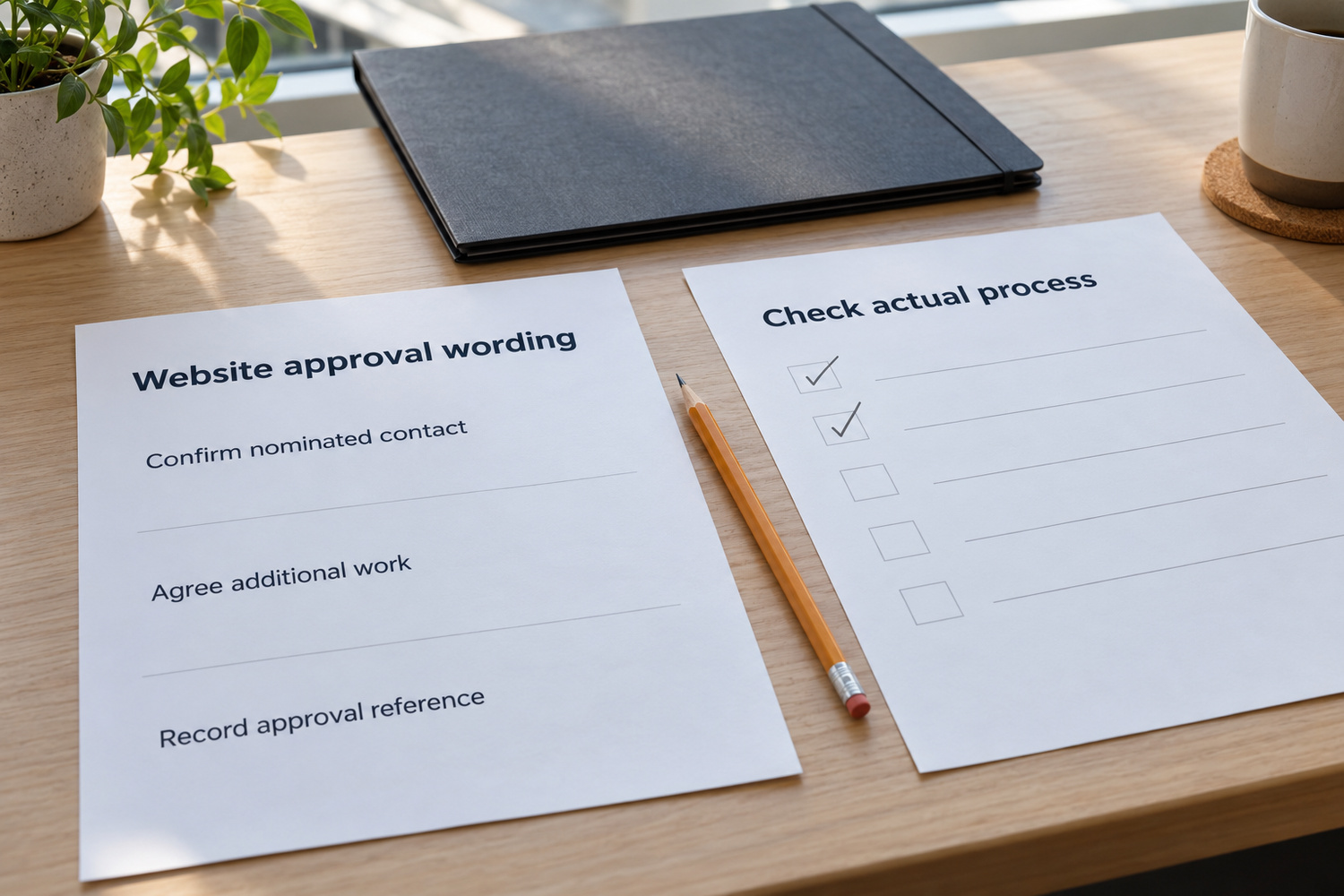
Some businesses buy their repairs through a formal arrangement, and that arrangement sets the rules before the workshop touches anything.
One fleet management company publishes the terms it asks its repairers to work under. Under them, a repair has to be agreed with the company’s authorisation team before the work starts. The team gives that job an authorisation number. The number then has to appear on the invoice. The terms include a limited exception for emergency repairs outside the team’s authorisation hours.
That is one company’s commercial contract as it stands today. It is not law, and it is not how every business buys repairs. Another business may agree a different approval process with the workshop. The website should explain the arrangements the workshop can support.
If the workshop calls a nominated person before starting extra work, its page can explain that process. If it offers business accounts, it can name the contact who handles them. Neither arrangement should appear unless it reflects how the workshop operates.
The page must not imply a repairer-network status the workshop does not hold. Describe a willingness to follow a customer’s approval process only where the workshop can do so. Claim a place in a named repairer network only where that current status can be verified.
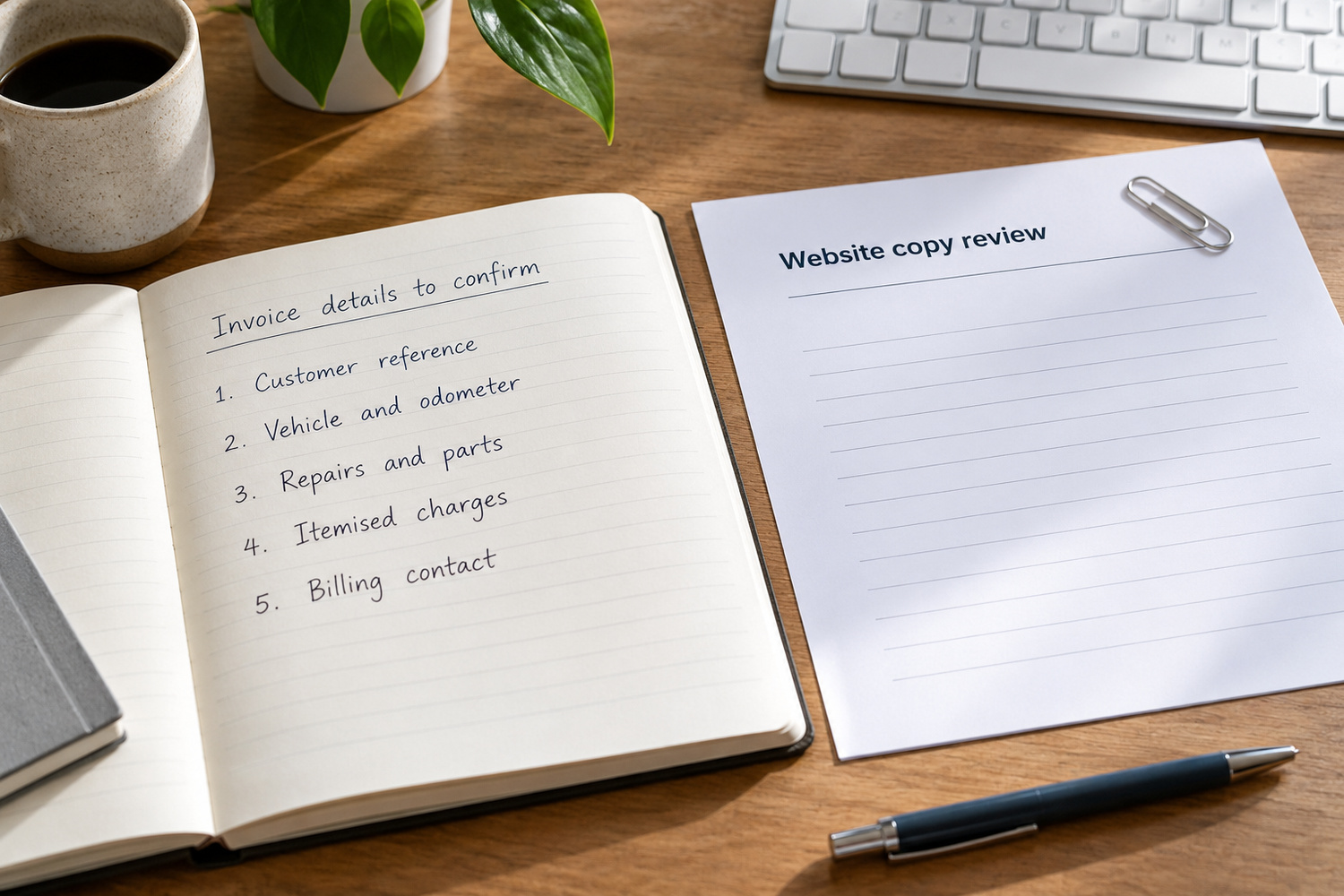
The person handling an invoice may not have spoken to the workshop about the repair. Clear paperwork helps connect the bill to the agreed job.
The same published terms set out what that one buyer wants on an invoice. The repair reference it issued. The vehicle identified clearly, with its odometer reading. An itemised list of the repairs done and the parts used. Charges set out separately rather than rolled into one line.
These are one buyer’s published requirements. They do not establish that every business asks for identical paperwork. A workshop should check what its customer requires.
A repair reference connects an approval to its invoice. A missing reference can make that match harder for the person handling the bill. A driver’s mobile number does not do that job. It tells the workshop who to ring. It does not, by itself, establish who gave permission or who is paying.
Does the workshop already issue itemised invoices and quote a customer’s reference on them? Then the page can say so plainly. That is a real capability and it reads as one.
If it does not, leave it out. Do not describe a process the office does not run. A business customer finds out in the first job. That is a worse place to find out than the website.
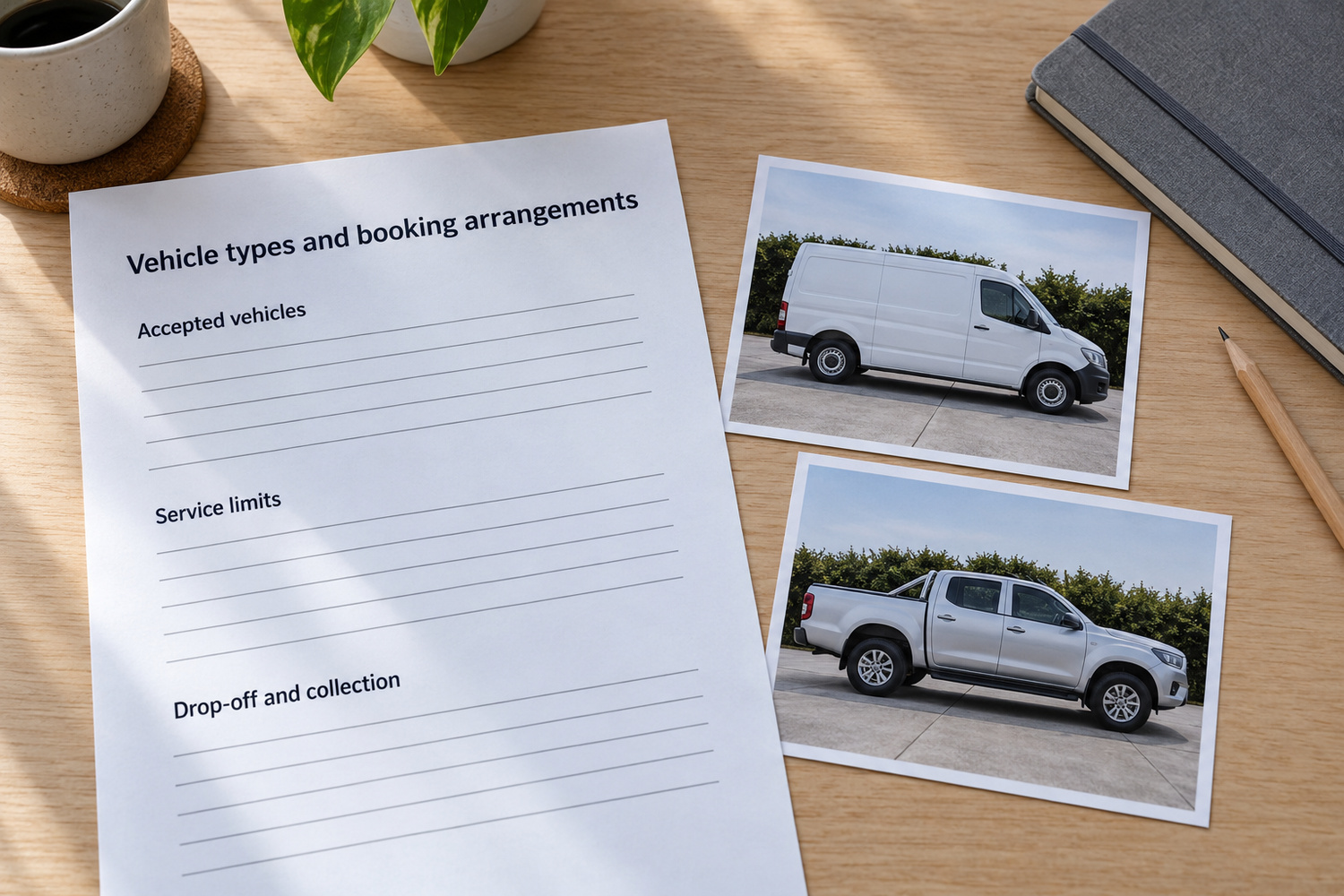
The page also needs to answer a basic question: can the workshop take the business’s vehicles?
Name the vehicle types the workshop accepts. A page showing only family cars may leave a business owner unsure whether its vans or utes are welcome. Do not infer workshop capacity or vehicle suitability from a broad service label.
State relevant limits as well. If the workshop accepts some vehicle types but not others, the distinction belongs beside the service description.
Then there are the arrangements, and this is where honesty earns its keep. Two vehicles booked in the same week. An early drop-off before the office opens. Collection by somebody other than the driver who brought it in. Each may help a business customer, but belongs on the page only if the workshop offers it.
Do not invent the rest. A page should not imply a loan vehicle or a promised turnaround. It should not imply a number of vehicles the workshop can hold at once, or an online approval portal. Publish none of those unless they are real. An invented arrangement is a complaint with a date on it.
Capacity claims need care. Even a broad claim about working around a business’s day needs support. Publish specific booking arrangements the workshop can deliver, and avoid implying extra capacity.
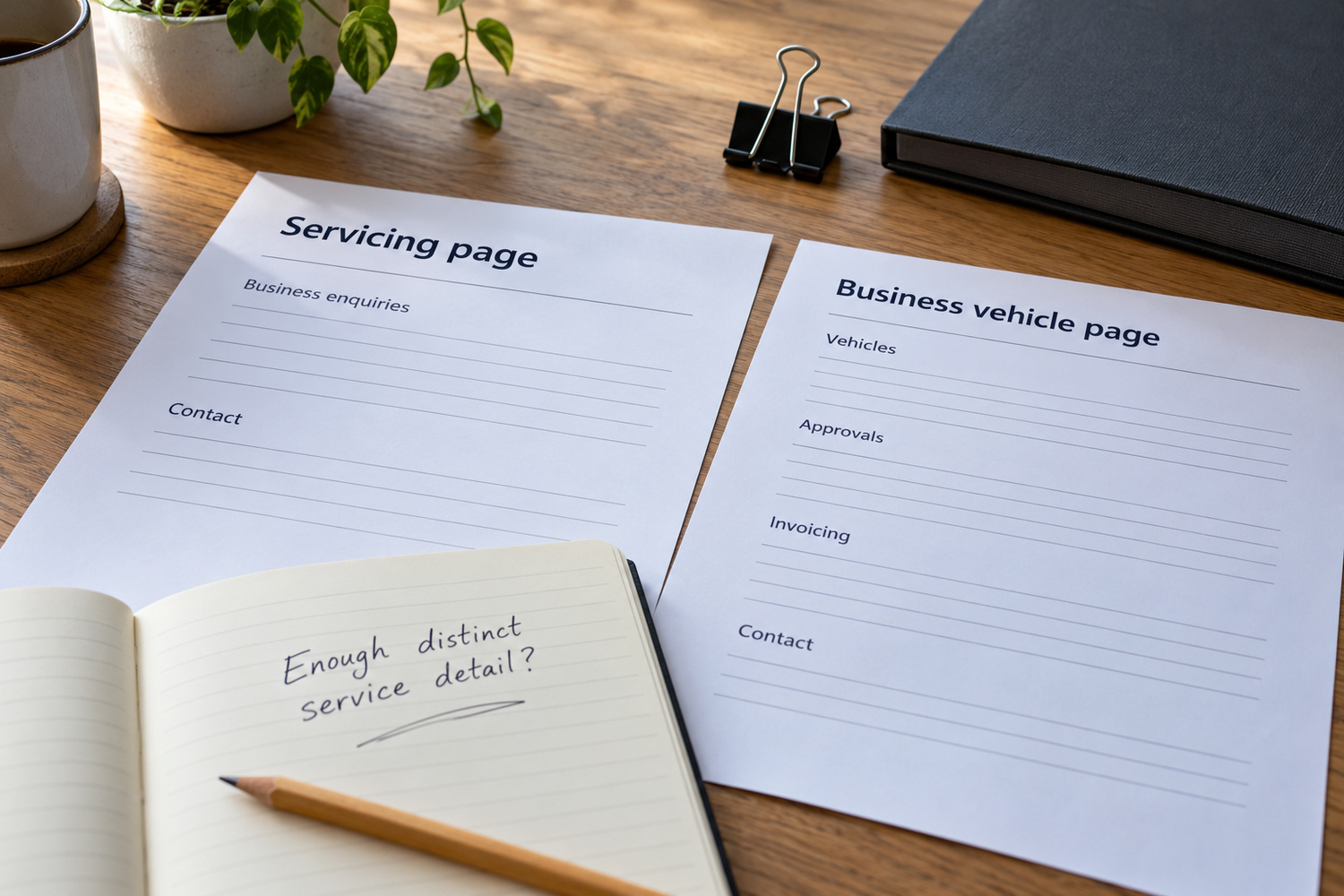
Sometimes. The test is whether there is anything real to put on it.
A separate business page can help when there is enough distinct, supported service detail to explain. That might include an accounts contact, a process for approving extra work, invoices sent to an office and relevant vehicle types. The question is whether those details help the buyer, rather than whether they can fill a page.
Is the honest answer to each of them the same as for any other customer? Then a page is not the fix. A clear paragraph on the servicing page does the work, with a business contact route beside it.
Either way, the enquiry has to land somewhere. Give business customers a clear route to someone who can discuss their needs. That may be the same person who handles other bookings. If the route is your contact form, check that it reaches someone who can answer the enquiry. Describe a reply time only if the workshop can meet it.
What a page cannot do is settle the deal. Rates, approval limits, account terms and who signs a repair authority are agreed in private, for a particular customer. The page gets a business to the point where that conversation is worth having. The basics are already out of the way.
Start by comparing your current page with the arrangements your workshop offers. Add a missing explanation or contact route where that answers the gap. That gives whoever handles your website design a specific task before a wider rebuild is considered.
Yes, where it does. The honest version names the vehicle types and describes how approval and invoicing are handled. Any claim about a place on a buyer’s repairer list needs evidence of current status.
Someone who can discuss the work and how approval will be handled. If the customer wants an account, direct them to the person responsible for that arrangement rather than implying every business booking needs one.
A website does not need to promise a portal or special system. Describe how the workshop handles enquiries and approval records, then confirm any buyer’s system and invoice requirements before agreeing to the work.