





A Hilux starts making a noise on the Monash on the way to work. The owner pulls off at the next exit, opens the phone, and picks a workshop before getting back in the car. You will not know any of it happened until the enquiry lands, or until it does not.
A workshop website has one job. It has to give a stranger enough to decide you can take their car, this week, at a price they can live with, without ringing you first. That is the standard website design for car mechanics is judged against in Australia, and it is not the same standard as looking modern. Five answers carry most of the weight: what you work on, when you can take the car, roughly what it will cost, what happens to the customer while the car is off the road, and whether a car still under warranty is safe with you.
Each of these is a reason not to call. Leave one unanswered and the job goes to the workshop that answered it.
Whether you work on their car.
All makes and models tells a customer nothing. A Ranger owner with a diesel particulate filter warning wants to see the word Ranger.
Whether you can take it this week.
Someone driving a car that is making a noise will not wait four days for a reply. A plain line about current lead times beats silence.
Roughly what it will cost.
Not every job can be priced without the car. A logbook service, a roadworthy inspection and a set of front pads can be. Those three numbers anchor everything else.
What happens to them while the car is in.
Courtesy car, key drop, a lift to the station, how long the car will be there. This settles more bookings than most workshops expect.
Whether their warranty is safe.
The owner of a two year old car assumes servicing anywhere but the dealer will cost them the warranty. Almost nobody rings to check. They just book the dealer.
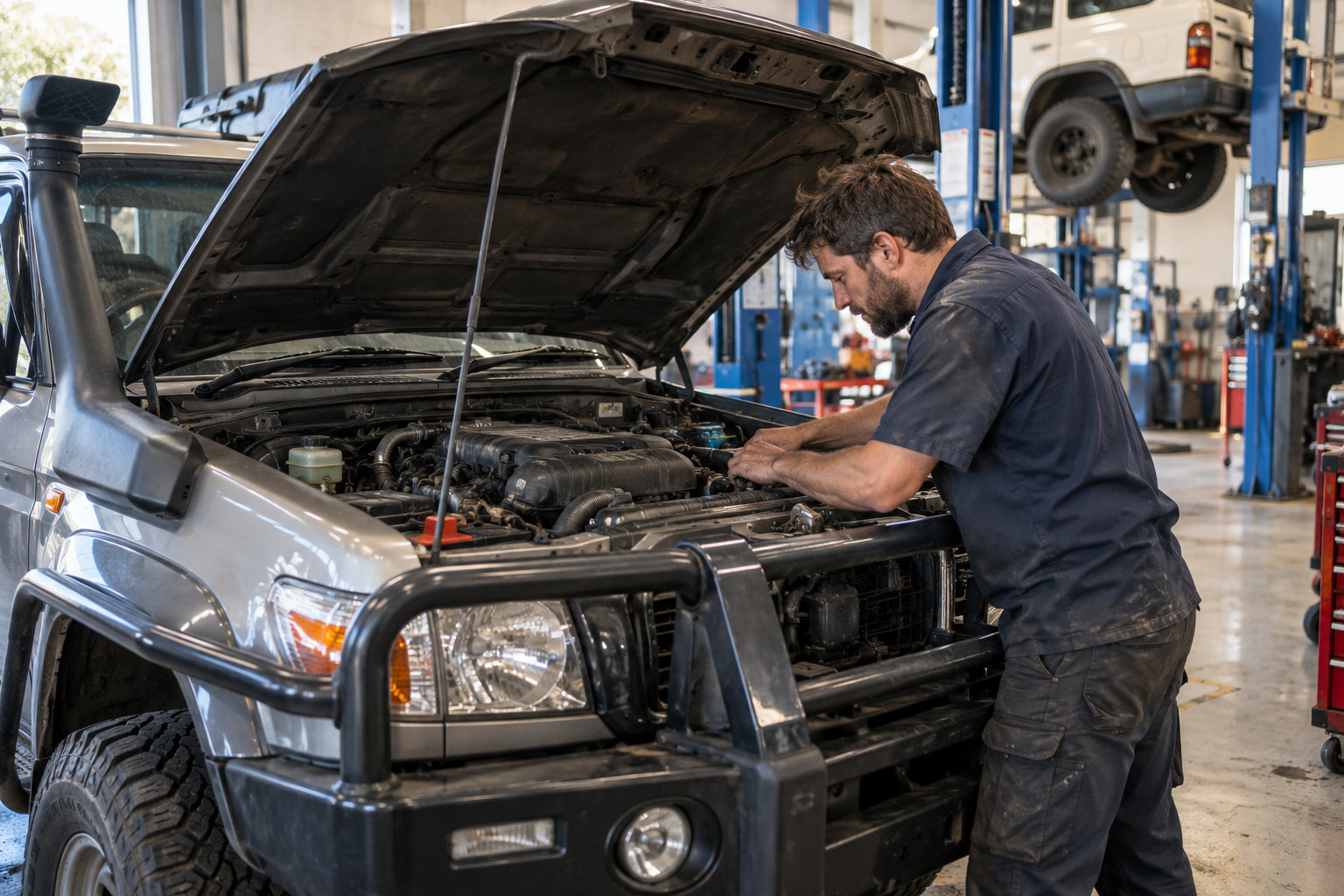
A workshop that services everything says nothing. Being specific is what makes a customer believe you can do their car, and it is the cheapest change most workshop sites can make.
Pick the work you want more of and give it a real page. European. Diesel and four wheel drive touring setups. Fleet and light commercial. Hybrid. LPG. Older Japanese. Name the models you see most and the jobs you do on them, because that is the detail an owner recognises.
Say what you do not take on as well. A workshop that states plainly it does not do European automatic transmissions loses nothing and saves itself three phone calls a week. Vagueness costs more than a narrow list ever does.
One caution. Do not publish a capability you cannot staff. Advertising hybrid work and then telling the customer your one trained technician is back on Thursday is worse than never mentioning it.
Website design for car mechanics is mostly a question of placement. The information usually exists somewhere on the site. It is on the wrong page, three clicks deep, or written for someone who already knows the business.
| What the customer wants to know | Where it has to be answered | What happens when it is not |
|---|---|---|
| Can you work on my car? | Home page and a page per specialisation, in words rather than a wall of brand logos | They assume you cannot and book the dealer |
| Can you take it this week? | The enquiry page, with a real current lead time | They ring the next workshop while waiting for your reply |
| What will it cost? | Fixed prices on defined jobs, plus a stated process for everything else | They decide on the only number they can find, which is somebody else’s |
| How do I get to work? | Servicing and booking pages: courtesy car, key drop, drop-off, turnaround | They book the workshop that said, even if it is further away |
| Is my warranty safe? | Its own page, not a line in a list | They keep going to the dealer and never tell you why |
| Who is doing the work? | A page with named technicians, qualifications and licences held | Nothing separates you from the cheapest quote in the area |
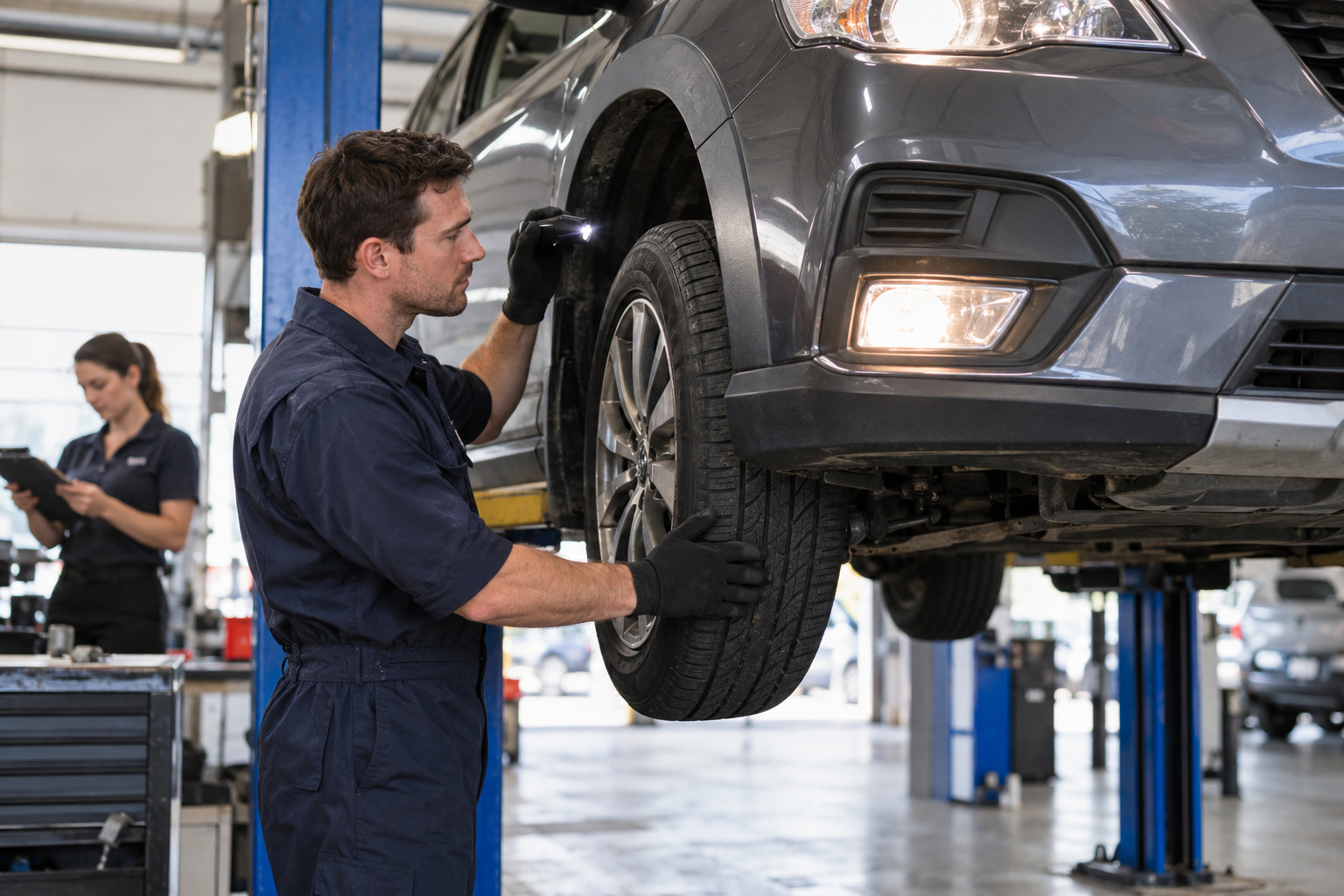
They are different jobs bought by different people. The roadworthy customer is selling a car, has a buyer waiting, and needs a date this week. The logbook customer owns the car, intends to keep owning it, and is worried about the service history and the warranty. One line each on a services list serves neither of them.
The inspection page has to use the word your customers use. In Victoria it is a certificate of roadworthiness, and only a licensed vehicle tester can issue one. In New South Wales the same inspection is a pink slip or eSafety check, and most light vehicles over five years old need one before registration can be renewed. In Queensland it is a safety certificate, and only an approved inspection station can issue it.
The details customers want are the ones almost no workshop publishes. A Victorian certificate of roadworthiness stays current for 30 days. If the car fails, the owner has 14 days to fix the faults and bring it back before they have to pay for a new test. Two sentences on a page remove a phone call your service advisor would otherwise take.
A roadworthy certificate says the car was safe on the day it was inspected. It is not a statement that the car is mechanically sound. Saying that on the page prevents an argument later.
Check the wording once a year. Queensland dropped the requirement to hold a safety certificate before a registered vehicle is offered for sale on 1 September 2021, although one is still needed before the vehicle changes hands. Any page still carrying the old position has been wrong for five years, and the customer reading it will not ring to point that out. Fees move as well. A Queensland safety certificate for a car is $102.70 from 1 July 2026, and that number lifts every July.
Bays are the constraint in a workshop, not enquiries. Ten vague messages a day is a worse week than four you can price and book. The website decides which sort you get.
An enquiry is quotable when it arrives carrying:
A form with a name field and a message box is the reason an enquiry takes three exchanges before anyone can price it. Six short fields cost the customer about twenty seconds and save the front counter two calls.
Be straight on the page about what cannot be priced from a form. An intermittent electrical fault needs the car on the hoist. Saying so, and explaining the diagnostic charge and what it buys, sets that expectation before the customer feels ambushed by it.
Plenty of what turns up in website design for mechanics is there because a page had a slot for it, not because a customer wanted it.
Stock photography of a spotless engine bay.
It is on four other workshop sites in the same suburb. A phone photo of your own workshop, with your own people in it, outperforms it.
A services list running to forty items.
Nobody reads it and it ranks for nothing. Six pages that each cover one job properly do more.
Brand logo walls.
A grid of manufacturer badges says you can work on everything, which lands as saying nothing.
A blog nobody updates.
Three posts from 2021 age the whole site. Better to have none.
Promises the workshop cannot keep on a busy day.
A reply within the hour is a good line only if someone is there to make it true.
A website moves a customer from deciding to booking. It does not create capacity and it does not repair a reputation. Both of those problems get louder when more people arrive, not quieter.
If you are booked out a fortnight and the phone rings out at 8am, more enquiries make both of those more visible rather than less. Fix the answering first, then send traffic at it.
Reviews are the clearest case. A site that sends a ready customer to a Google profile sitting at 3.4 stars is working against itself. If that is the position, the review problem is where the first money goes, and the website comes after it.
Three things decide whether the build goes well, and all three belong to the workshop rather than the designer.
The specialisations you will commit to.
Two or three you want more of, not a list of everything you are capable of.
The prices you will publish and the ones you will not.
Decide before the build, because retrofitting a price page later usually means rewriting the enquiry flow around it.
The booking process you can staff on a bad Tuesday.
Whatever the site promises has to hold when two technicians are away and the hoists are full.
Then put a date in the calendar for next July. Inspection fees lift then in Queensland, and rules elsewhere change without anyone telling a workshop about it. A page quoting a fee or a position that has since moved is the sort of detail a customer notices and a competitor never has to point out.
If you want a workshop site built around those answers rather than around a services list, CJ Digital can scope it. Start with the contact form and name the two answers your current site does not give.
Yes, because the profile sends people somewhere. A customer who taps through from the map is deciding on the page they land on, and the profile itself cannot hold a roadworthy explanation, a specialisation page or a quotable enquiry form. The two work as a pair.
Most workshops are well served by eight to twelve. A home page, one page for each specialisation you want work in, separate pages for logbook servicing and inspections, a page about the people and licences, a booking or enquiry page, and contact details. More pages than that usually means overlap.
It should, because it is the objection that stops the call being made. The safe version states the general position, points to the manufacturer’s conditions, and avoids promising an outcome for one customer’s specific warranty. It is worth its own page rather than a line buried in an FAQ.
It suits work with a fixed scope, such as logbook servicing and inspections. Diagnostic work does not fit neatly into a calendar slot, and a booking system that pretends otherwise creates a scheduling problem in the workshop. Many workshops do best offering booking for defined jobs and an enquiry form for everything else.
Hours change with public holidays, prices change, and capability changes when a technician is trained or leaves. A short check each quarter covers most of it. Add one annual pass over anything quoting a fee, a rule or a certificate name, since those tend to move on 1 July.