





At 11.20 on a Saturday, someone stands inside the Abbotsford Convent with a phone in one hand and a precinct map in the other. They found a local ceramic studio the night before, but its website did not say whether visitors were welcome, which building it occupied, or whether work could be bought that day. The studio may be 100 metres away, but the visitor cannot tell. They choose coffee and keep walking. The work earned interest, but the website did not turn it into a visit.
Web design in Abbotsford has to sell the visit before it can sell the product, meal, or appointment. Victoria Street shopfronts, Convent studios, riverside destinations, and converted workspaces create different kinds of friction. A useful site settles the same questions fast: what is here, why is it worth the trip, when can I come, and where is the door?
When the address does not explain the business, the website has to do more of the work.
A restaurant on the Abbotsford side of Victoria Street can borrow meaning from the whole strip. The shopfront, tram line, neighbouring grocers, and Vietnamese food history tell passers-by what kind of visit is possible. A studio near St Heliers Street gets less help from the footpath. Its address may lead to a gate, a shared building, or a large precinct with many tenants. The website has to replace the clues a clear shopfront would normally provide.
Abbotsford is not organised around one commercial strip. Victoria Street runs from Hoddle Street to the Yarra, while the Convent and riverside precinct draw visits for art, food, classes, events, green space, and the Collingwood Children's Farm. Converted industrial buildings hold studios, offices, and hospitality venues. Health and professional services also sit among residential streets where a first visit may involve an upstairs tenancy or a side entrance.
Yarra City Council's 2026 work on Victoria Street treats North Richmond and Abbotsford as one connected precinct and gives the Vietnamese community's cultural and economic role a central place. A local website must explain which part of Abbotsford it belongs to and what kind of visit follows. Repeating the suburb name does not do that job.
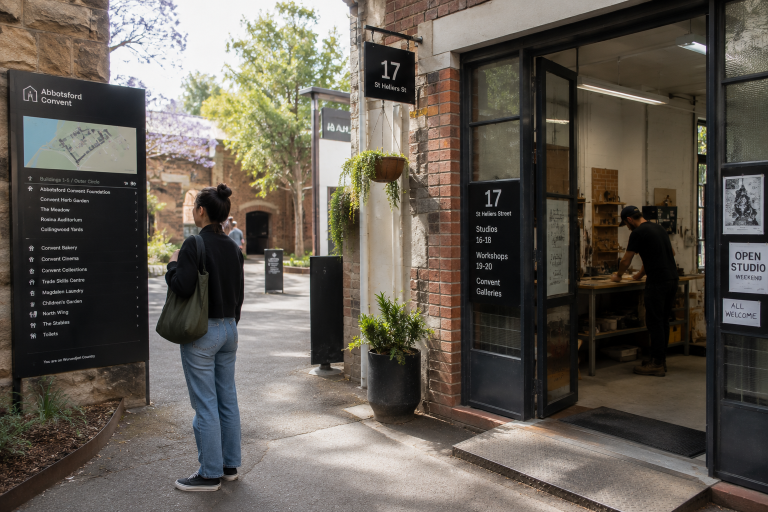
The first job changes with the business model. A restaurant needs to turn appetite into a timed visit, booking, or order. A maker needs to show the work, then explain how it can be seen, bought, collected, or commissioned. A clinic or professional service needs to remove doubt around the practitioner, appointment, entrance, and next step. The same visual treatment cannot carry all three jobs.
| Business setting | What the website must settle | Useful content |
|---|---|---|
| Victoria Street hospitality | Why come now, and what can be ordered or booked? | Current menu, hours, dietary notes, booking or order link, access details, and recent photography |
| Makers, studios, and workshops | Can people visit, buy, collect, commission, or join a class? | Portfolio, open-studio status, appointment details, stock or commission process, events, map, and building entrance |
| Health, professional, and local services | Who is the right person, what happens next, and how is the premises reached? | Named practitioners, services, fees, booking path, transport, accessibility, and exact entrance |
A Victoria Street restaurant may need a menu and booking path near the top. A Convent maker may need a map and open-studio status before product detail. A health service may need named practitioners and a clear booking choice before local imagery. Business type sets the main job; the address changes the supporting detail.
Access information is part of the offer when a business sits inside a precinct, behind another frontage, or away from the main strip. The Abbotsford Convent's visitor information includes a precinct map, public transport guidance, cycling access, parking details, and accessibility maps. Those details are not decoration. They remove the small doubts that make a first visit easy to postpone.
A local business does not need a travel essay. It needs the few facts that settle the trip on a phone screen. Before someone leaves the page, they should be able to find:
Put these details beside the action they support. Opening hours belong near the booking or visit prompt, not only in the footer. Entrance notes belong on the contact page and on any event, class, or appointment page that may be the first page opened. On mobile, the phone number, directions, and main action should work without pinching, zooming, or downloading a PDF.
A shopfront can explain itself from the footpath. A studio behind a gate cannot.
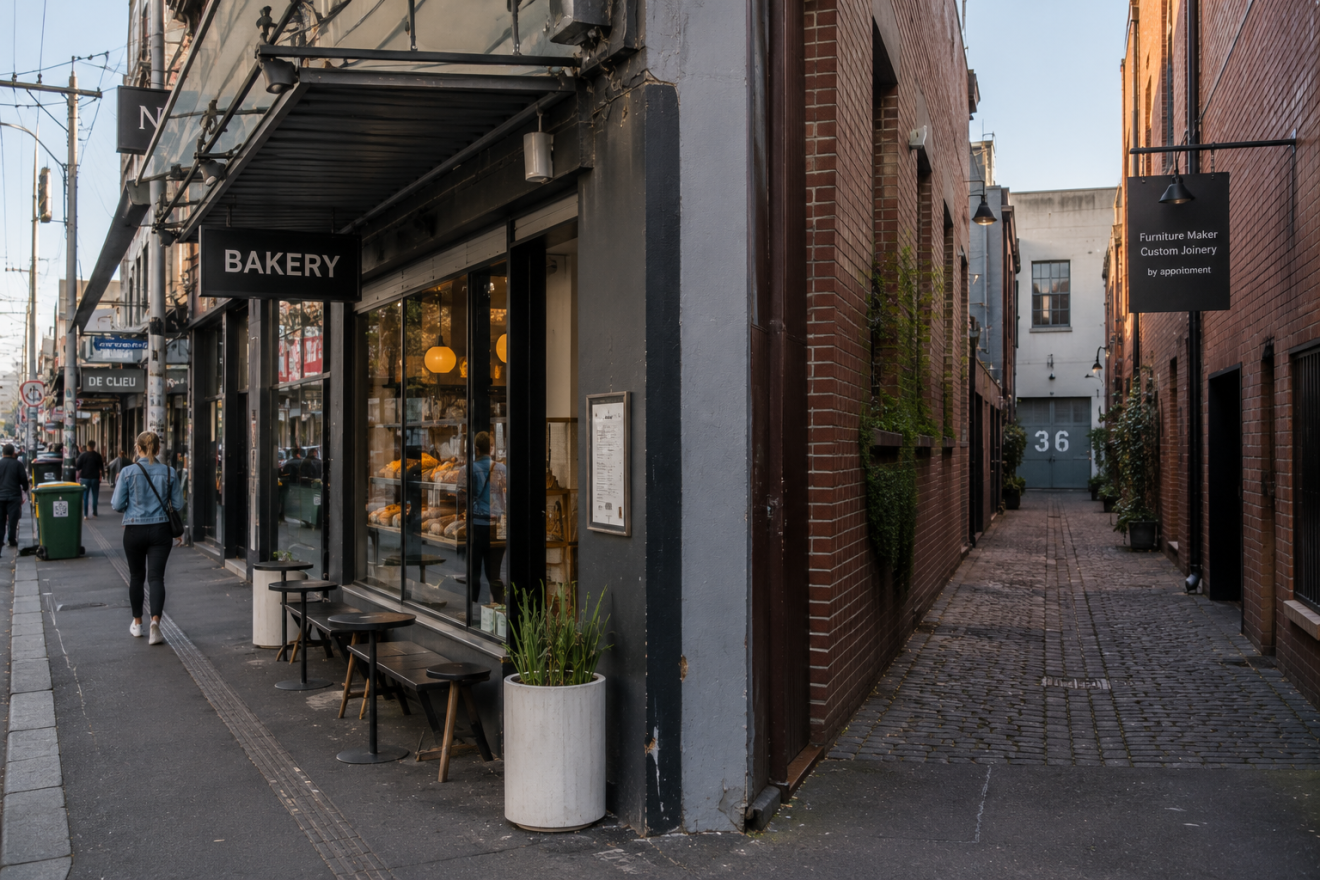
A website can strengthen local relevance and reputation, but it cannot move a business closer to someone making a local query. Google says local results are mainly shaped by relevance, distance, and prominence. Distance is fixed. Clear services, accurate business details, useful local pages, links, and genuine reviews can support the other two factors.
The Google Business Profile and the website need to tell the same story. The address, phone number, opening hours, service area, and main category should match. A studio that opens by appointment should not look like a seven-day shop. A clinic in a shared building should use a precise address and explain the entrance on the website. Google also advises using only needed categories and one profile per business.
No page can guarantee a Maps position or buy a better local ranking. The site must make the offer clear and give the profile somewhere credible to lead. If the profile promises a class, dinner, consultation, or open studio, the linked page should complete that promise without another search.
A beautiful site can still make a visit hard. Large photographs can make a restaurant, studio, or wellness space look appealing, but they cannot answer whether it is open, where the entrance sits, or what can be booked. When those facts are buried in a footer or an old PDF, a simple visit becomes harder than it needs to be.
That gap grows when social media becomes the permanent information desk. A feed is useful for a new menu, workshop, exhibition, or batch release, but the important post soon moves down the page. Stable facts belong on the website and in the Google Business Profile. Social updates can point back to one place staff can correct when hours, access, prices, or bookings change.
Local copy fails when a nearby suburb page is reused with new place names. Collingwood's Smith Street economy is more visible from the strip. Abbotsford is pulled between Victoria Street, the Convent, the river, converted industrial buildings, and quieter service pockets. Those conditions create different questions. A page that could move across the boundary unchanged has not captured either place.
A useful brief starts with the moment interest becomes action. Name the main action the site needs to support, then name the doubt that stops it. For a restaurant, that may be current hours, dietary information, or a booking link. For a studio, it may be whether visits are welcome and how commissions work. For a clinic, it may be the right practitioner, available appointments, or an entrance that is not obvious from the street.
The brief should also name who will keep practical details current. Editable hours, menus, events, classes, stock, and access notes are worth little if every change waits for a developer. A focused site can be managed in-house when the offer is stable and someone owns updates. Professional work earns its fee when bookings, ecommerce, several practitioners, calendars, migration, and local search structure must work together.
The final part of the brief is evidence. Real photography, current menus, named practitioners, workshop dates, collection terms, and clear contact details do more than polished claims. They show what happens after the click. That matters for a destination business asking someone to travel before judging the experience in person.
The strongest local websites are built to change because the street around them changes. Yarra City Council's draft Victoria Street Revitalisation Plan sets out visible work over the first two years and deeper public-space and local-economy work over the following two to four years. It also proposes support for local business, cultural events, new investment, and stronger links to the precinct's Vietnamese identity. The plan was still a draft in July 2026, so its details may change after community feedback.
The direction is useful for a business planning a site now. New tenants, public works, events, and changed access can alter what a local page needs to say. A site should let the business update hours, menus, transport notes, event information, and key offers without a rebuild. Each genuine service or destination also needs a clear page that can stand alone when Google or an AI answer pulls it from the wider site.
Start with six places: the homepage, the main service or product page, the contact page, the Google Business Profile, the mobile menu, and one booking or enquiry path. Check whether they explain what the business does, why the visit is worth it, and how to arrive. CJ Digital can review those pages, then scope web design for an Abbotsford business around the job the site has to do. Send the current site and one common visit, booking, or enquiry path through the contact page.
An Abbotsford business homepage should state the offer, the main next step, the location context, and the practical visit details. It should also link straight to the current menu, service, class, product, booking, or enquiry page. A visitor should not need to open several menus to work out what happens next.
A maker does not need ecommerce unless online sales suit the stock, margins, and fulfilment process. A clear portfolio, current availability, commission details, collection arrangements, and open-studio information may do the job. Ecommerce becomes useful when products are repeatable, stock can be kept current, and delivery can be handled reliably.
Social media cannot fully replace a website because important information moves down the feed and sits on a platform the business does not control. Use social channels for timely updates and personality. Keep stable information, bookings, menus, access, services, and contact details on the website.
No. A separate suburb page is useful only when the service, evidence, access information, or local conditions genuinely change. Pages that repeat the same copy with a new suburb name add little. One developed page that reflects the business's real catchment is stronger than several thin copies.
No. Proximity matters only when local knowledge changes the finished website. The useful questions are whether the brief captures the business setting, whether the designer can visit when a site walk or photography would help, and whether the finished pages explain the local details accurately.