





A customer asking about a touring build may not yet have a vehicle, let alone an agreed list of work. The 4WD could be on order. It could already carry equipment fitted by a previous owner. Before discussing a plan, the shop needs to understand what the customer has and what they want.
Its website should help that conversation start. The build page can explain the work offered and the steps towards agreement. Completed examples can show which work the shop has delivered. The enquiry should ask for the vehicle details that help describe the proposed job.
A request, a gallery entry and a service description may refer to the same kind of project. If they disagree about what the shop does, the website has left the scope unclear.
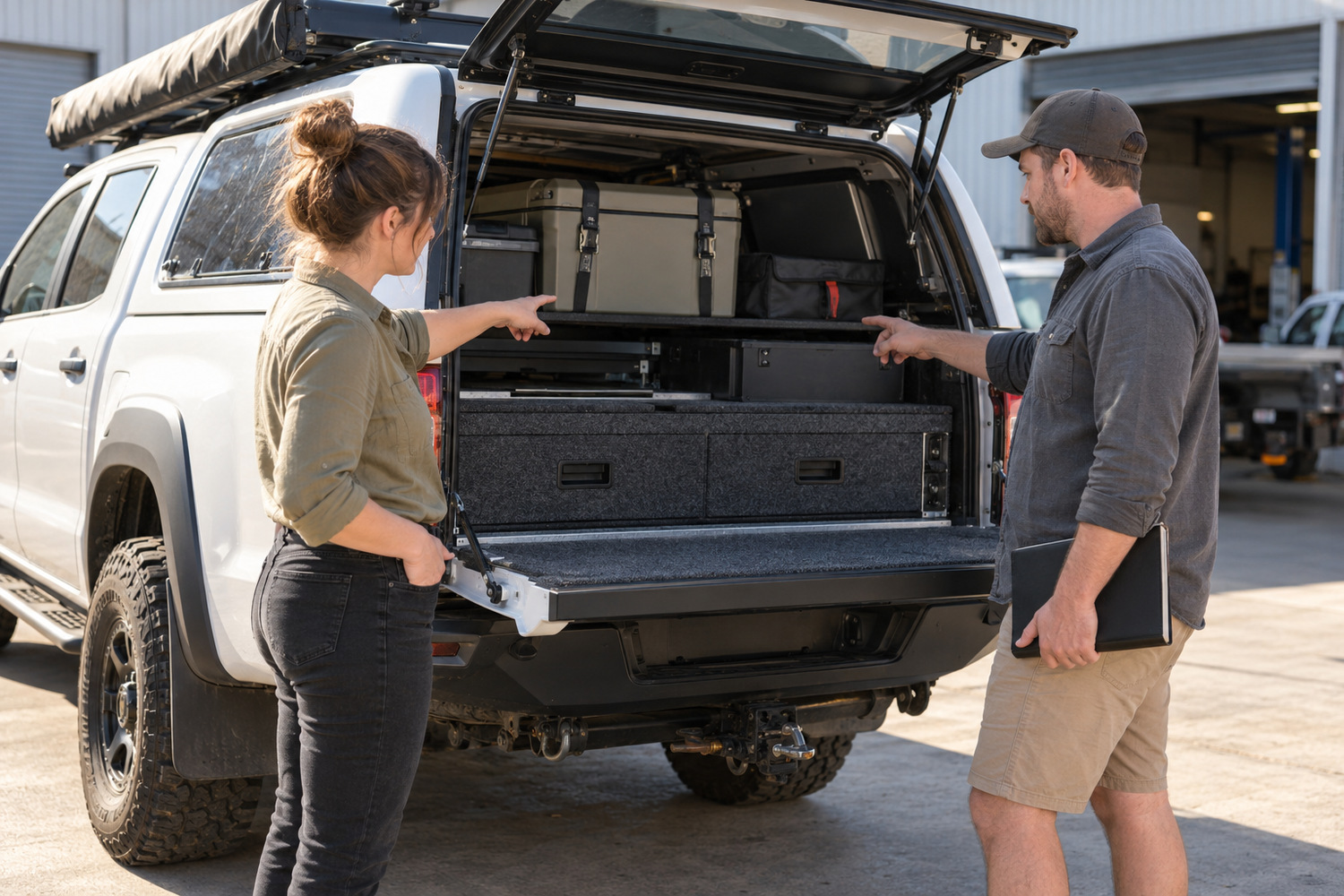
A service booking and a build enquiry begin in different places.
A defined service has a named scope a customer can read before booking. A proposed build may begin with a result the owner wants, while the work behind it still needs discussion. An owner who needs the vehicle set up for towing has named a result. The list of jobs that gets there has not been written yet.
So the page has to move a reader from interest in a result to an agreed specification. A specification is a written list of the work. The two are not the same thing. A website that treats them as one leaves a gap somebody has to close by phone.
Two enquiries about the same model can need different conversations. One vehicle is on order and has not arrived. There is nothing to inspect yet, so the talk is about a plan. Another already carries gear fitted by a previous owner. What is on it shapes what can sensibly come next.
None of this means every service is fixed or every build is made to order. Some shops sell set packages, and some servicing is quoted job by job. The page’s job is to say which kind of work this enquiry is about.
How the enquiry reaches the shop is a separate decision. Phone, form, or both, and how fast each gets answered, is the subject of phone and booking forms.
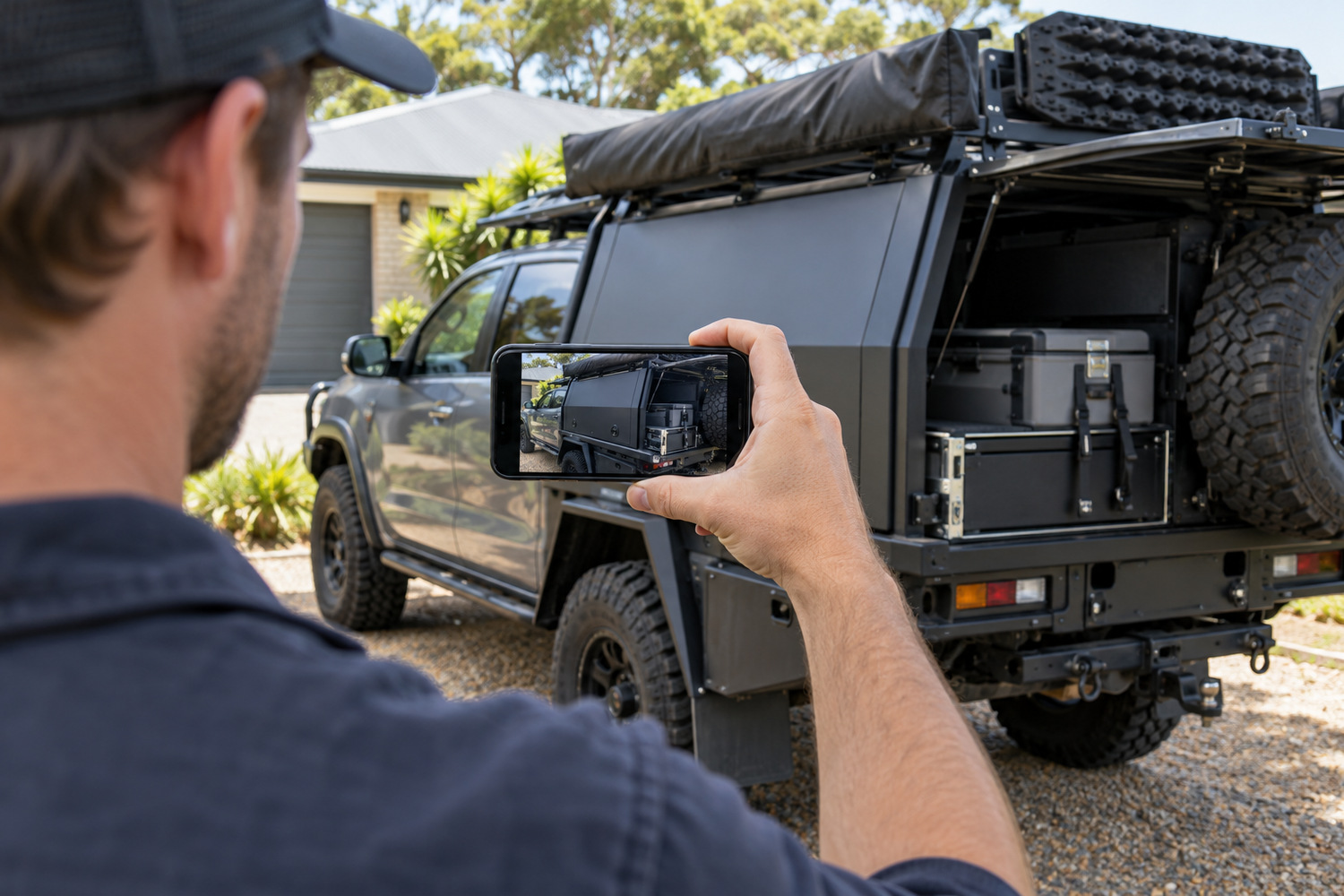
The details worth asking for are the ones that change the description of the work.
A specialist’s public build-request form shows one approach. It separates a vehicle already owned from one on order, and from one still being considered. It asks for the make, the model and series, and the year. It asks what the 4WD is used for. It asks which accessories the owner wants. It invites a photo that may help with the quote.
Each of those changes what the shop can say back, which is the test a question has to pass.
Vehicle status helps the shop decide what can be discussed or checked at that stage. Model, series and year matter because one model name can cover more than one version. Those details help the shop identify the vehicle the proposal concerns. What is already fitted tells the shop whether this is a first step or an addition. A current photo may show visible equipment, but it is supporting context rather than a complete record of the vehicle.
Intended use helps explain what the owner wants from the project. Take two made-up owners of the same vehicle. One tows a camper to the High Country over summer. The other drives it to work and back. They are describing different projects, and a page that does not ask cannot tell them apart.
One limit belongs on the page in plain words. A request that has been sent is not a booking, a price, or time held in the workshop. Say what happens next instead, so the owner is not left guessing whether a job has started.
None of this is an argument for a longer form.
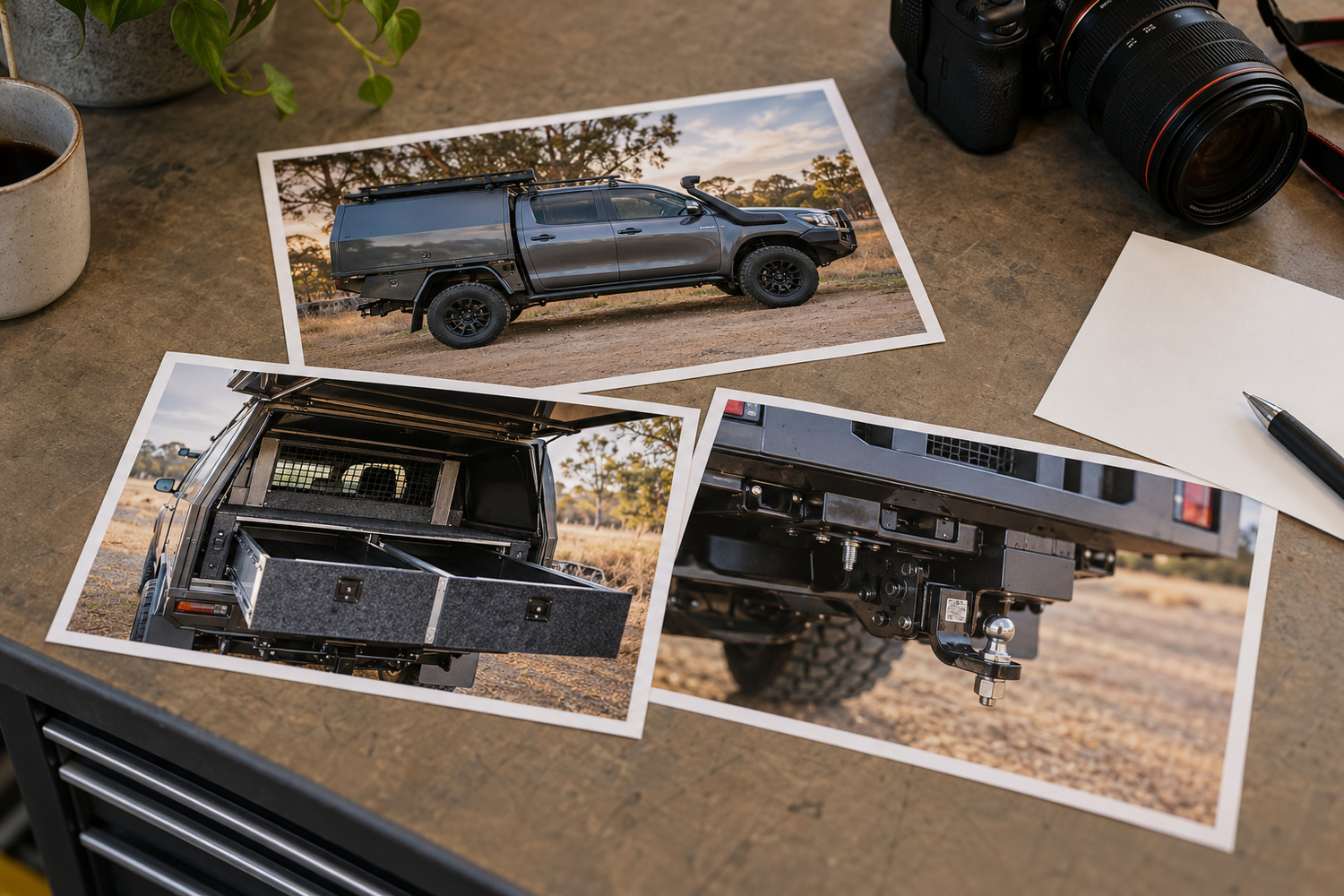
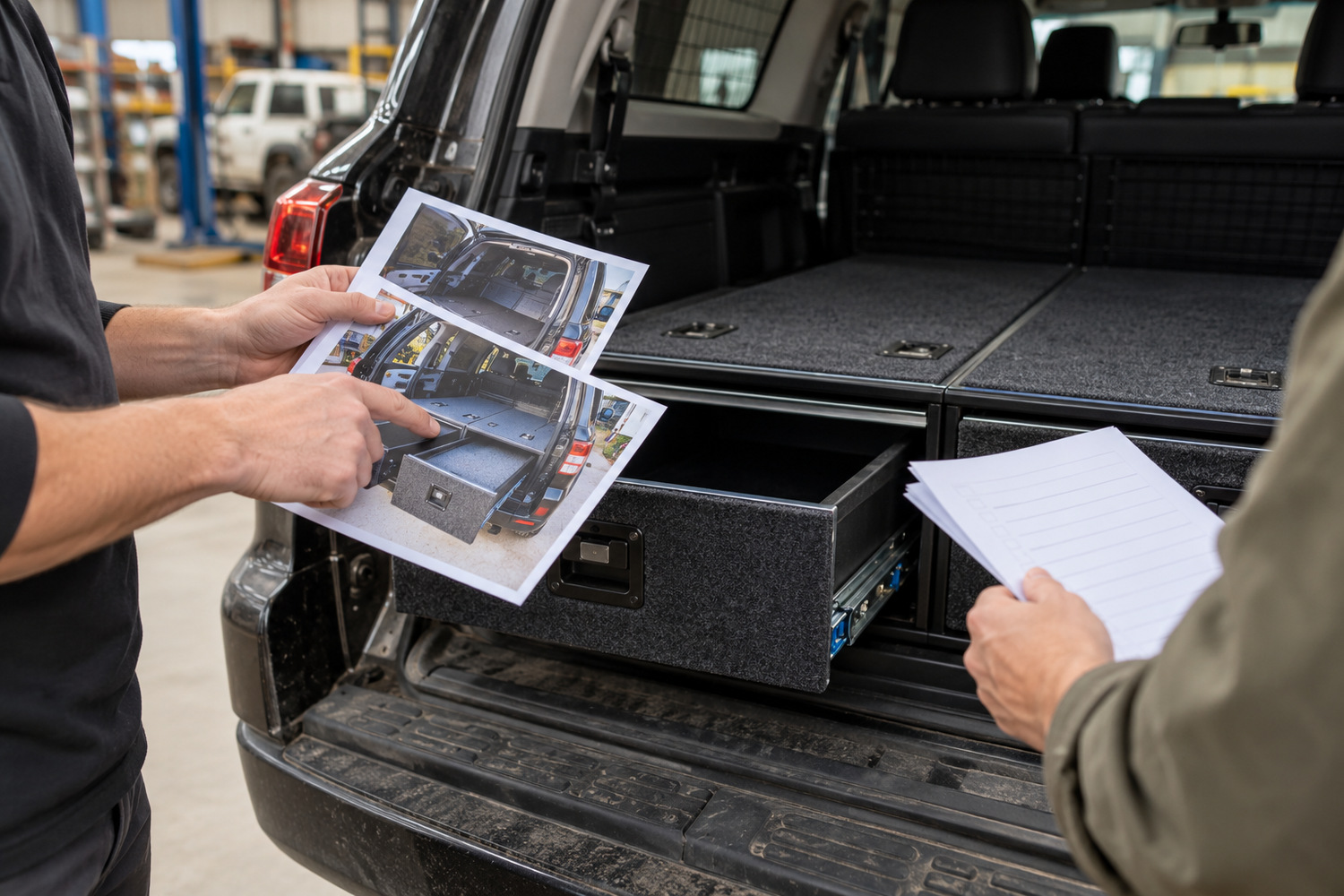
A gallery is evidence, and the reader has to be able to read it.
A useful entry links the vehicle it started as, the work the shop did, and what the owner uses it for. The same specialist’s gallery names the vehicle in its build headings, often with the year. It then adds a short line, sometimes the work and sometimes the purpose. That is readable. Photographs alone may leave the supplied work and intended use unclear.
A photograph cannot establish what was included. Two vehicles that look alike can have had very different work done. Some equipment may have arrived with the owner rather than being supplied by the shop. The caption is where that gets settled.
A completed example does not by itself establish a standard package or promise the same work for another vehicle.
So captions should describe real work on that real vehicle. Where an image is a concept rather than a job the shop has delivered, the page should say so. That label lets a reader distinguish an idea from evidence of delivered work.
This is the surface that sets expectations, so the service description has to be able to meet them.
Stages earn their place on a page when they say what is settled and what is not.
The specialist describes three stages. The shop learns about the vehicle and how it is used. It works out a plan and puts a quote together. Then, once that is locked in, it orders parts and books time in the workshop. That is one business’s sequence, not a rule every shop follows.
The useful part for a reader is the line between those steps. For the published example, ordering and booking follow the agreed plan. A shop should state its own sequence and what each stage confirms, without implying that another business follows the same process.
That line protects the shop as well. Pages get into trouble when they imply a date or a figure nobody has agreed to. If parts are ordered only after agreement, the page can say so. It does not have to promise when they land.
Keep the stages about how the work is organised, not how the vehicle gets built.
A capability claim is worth what a reader can check.
A tenure statement does not identify which work the shop performed. A described job can show that work. The reader wants to know whether this shop has done something like the thing they want. A year count does not answer that.
The service description, gallery and request form need to agree about the work offered. Check for a gallery entry showing work the current service description does not mention. It may be historic work, a missing explanation or something the shop no longer offers. Establish which applies, then make the two pages agree.
Trace one real completed build through your own site. Take one finished build out of the gallery. Read the service page and ask whether every kind of work in that entry is described there. Then read the request form, and ask whether it collects what the shop would need to quote that job again.
Start with the mismatch that leaves the proposed work unclear. That may be the service description, an incomplete gallery caption or a question missing from the request. The three pages should support one consistent explanation.
Where the three disagree, write it down. That list is a better brief for a website design job than a page count. It names what the site has to explain before anybody argues about how it looks.
Describe it as a proposal or concept, and distinguish it from completed work. The label should make clear that the shop is explaining an idea rather than documenting a delivered job.
Describe the ones you have properly. Captions can explain which work the shop supplied and why it was chosen. Even a small gallery can explain real delivered work when each entry has a clear caption.
Next to the description of build work, not only on a contact page. The questions it asks about the vehicle and its use make sense beside the work they relate to.