





A plumber in Berwick is recommended twice in a local Facebook group before breakfast. By lunchtime, the homeowner has opened the website on a phone and closed it again. The gallery uses polished stock photos, the service area says only 'Melbourne', and the quote form asks for details the homeowner does not have. A second plumber shows three real jobs, names the suburbs covered, and puts the phone number at the top of the page. The referral created the chance. The website sent the call somewhere else.
Word of mouth still does much of the selling for a good trade business. The website handles the check that follows. It should prove the work is real, confirm the business can take the job in that area, show the right licence or registration, and make contact simple on a phone. Anything that does not help with that check is secondary.
Websites for tradies do not need to behave like glossy company brochures. They need to remove the practical reasons someone might keep looking.
A referral gives a trade business a head start, but it is rarely the end of the decision. A neighbour, builder, supplier, or property manager can pass on a name. The person receiving it may still check the type of work, the service area, recent jobs, and the easiest way to get a quote. For larger work, the check can include registration details, insurance, project scale, and signs that the business is still active.
The depth of that check changes with the job. A blocked drain may lead to a call within a minute. A renovation or switchboard upgrade needs more detail. The website must support both without forcing the urgent job through a long form.
Some sole traders can run for years through repeat work and referrals alone. That does not make a website pointless. It means the site can stay small and focused, because its job is to support trust that already exists rather than invent it from nothing. A clear five-page site with real evidence can be more useful than a large site filled with generic advice.
A useful trade website answers five practical questions before they become a lost call. The answers should be visible on a phone without opening several menus.
The legal display rule is not the same for every trade. Energy Safe Victoria requires a Registered Electrical Contractor to place the REC number on all promotional material. It also requires at least $5 million in public liability insurance while the contractor carries out or offers electrical contracting work. Victoria's Building and Plumbing Commission provides public searches for builders and plumbers by name, business, licence or registration number, location, and work type. A website should make that check easy, not leave someone to work out which name to search.
Credentials need context as well as a number. 'Licensed and insured' is weak when it does not say which licence applies or who holds it. A builder, plumber, electrician, and landscaper do not operate under the same rules. The site should state only what is current and relevant to that business, then remove expired badges and old certificates when details change.
A service area should match the jobs the business can profitably take, not the size of the city on a map. A plumber based in Berwick cannot promise the same call-out time in Melton or Craigieburn. A builder may travel that distance for a six-month extension because the project supports it. A painter, landscaper, or maintenance contractor may work in weekly clusters so the route changes from one day to the next.
Writing 'Melbourne-wide' can make a business look flexible. It can also fill the phone with work that is too far away, too small for the travel, or impossible to attend on the promised timing. The better approach is to explain the real boundary. State the core service area, the wider area accepted for larger jobs, and any limits on emergency or same-day work.
Berwick, Melton, and Craigieburn are not interchangeable names for copied pages. They involve different travel times, job sizes, and schedules. The website should reflect how the business plans work across those areas, rather than claim every suburb available.
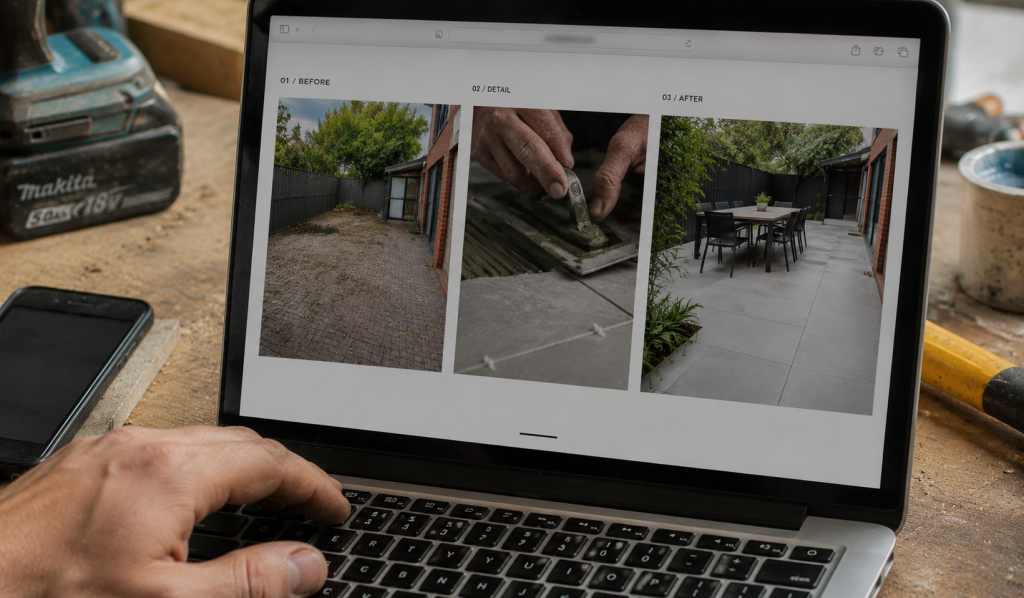
A trade website can skip any feature that creates more upkeep than value. A weekly blog is a poor promise when nobody has time to write it. A dated news page looks worse than having no news section at all. One well-written service page and a gallery that grows with real jobs are a better use of limited time.
Stock photos are another easy cut. A perfect model in fresh workwear holding a spotless drill proves nothing about the work. Real project photos do not need studio lighting. They need enough detail to show the finish, the scale, and the kind of job the business accepts.
Large animations, long background videos, and moving counters also carry a cost. They add weight to the page and can push the phone number or quote button below the first screen. Web design for tradies should make the proof easier to inspect, not make someone wait for it to appear.
The site can also skip a page for every suburb when only the place name changes. A useful service-area page explains the work, travel range, and limits. Near-identical pages make the useful information harder to maintain.
The most damaging website faults are ordinary. A form can stop sending while the confirmation message still appears. A phone number can work on the home page and fail inside the gallery. A service page can describe domestic work while the business has moved into commercial projects. None of these faults looks dramatic, but each sends a strong referral back to the shortlist.
Test the full contact path from a phone once a month. Send the form, tap the phone number, open the gallery, and check the email arrives. Ask someone outside the business to find the service area and registration details. The test should take less time than quoting a small job.
The gallery needs the same discipline. Do not publish another contractor's work, manufacturer images, or photographs pulled from a supplier page. Apart from the ownership problem, borrowed images create the wrong expectation about the scale and finish of the work. A smaller gallery of genuine jobs is stronger because every image can be explained.
The website and local SEO do different jobs. Local SEO helps the business appear when no referral exists. The website gives that new contact enough proof to call. Reviews, a complete Google Business Profile, and consistent business details can bring attention, but they cannot repair an unclear service area or a gallery that does not show the work.
The broader local SEO foundations for plumbers, electricians, and builders are covered separately. The weekly routine can stay small: add a real job photo, ask for a review, check the profile, and note any service or area change. Those tasks work because the website has stable pages ready to carry the proof.
There is no value in driving more visits to a quote form that does not send. The website comes first when the problem is structural. The weekly SEO routine comes next when the site can already explain the work, area, credentials, and next step.
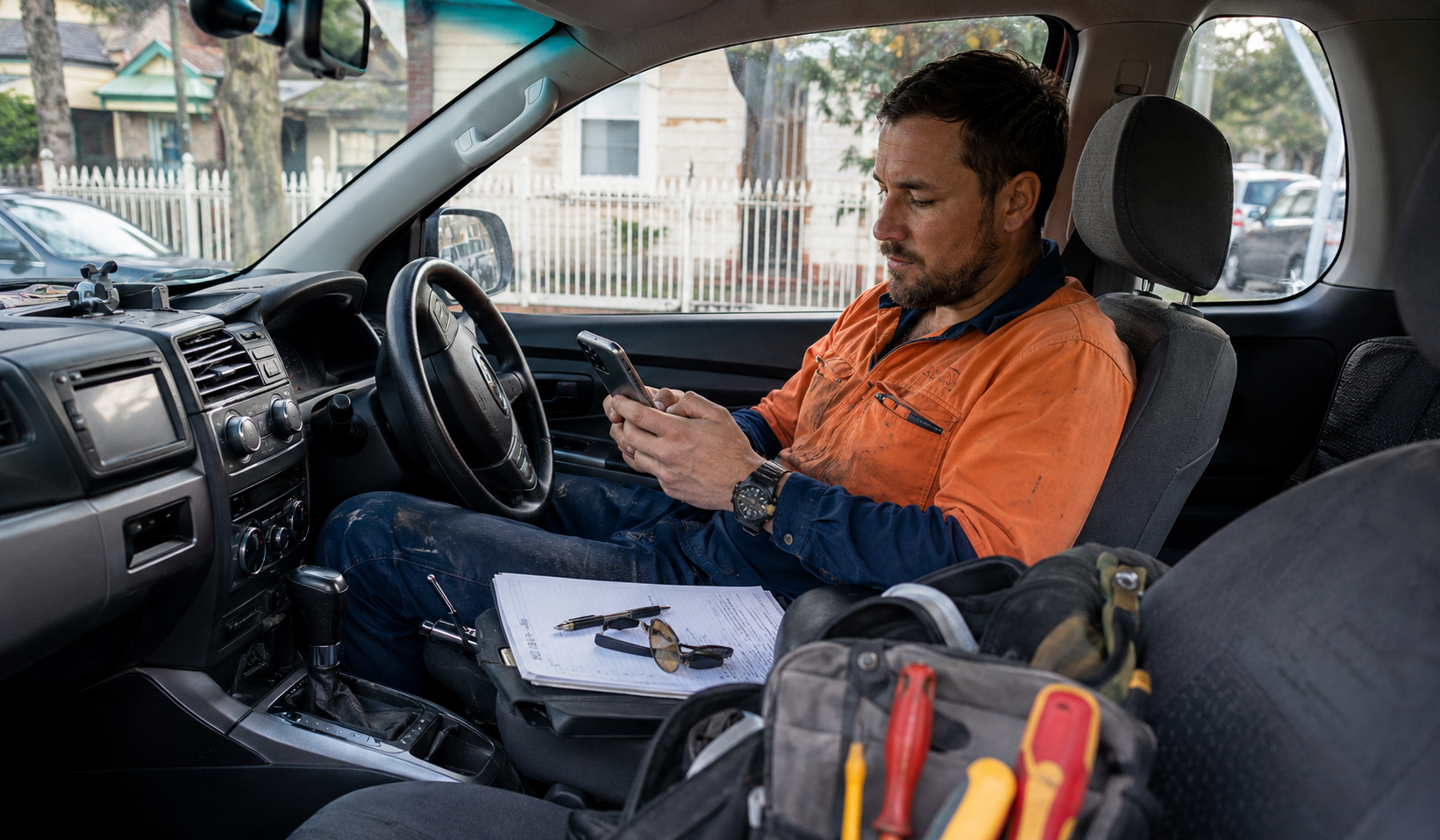
The next website update should start before the tools go back in the ute. Take a wide photo, one close detail, and one finished view. Record the suburb, the problem, the work completed, and any limit that shaped the job. Get permission to use the images, then save them in a folder the office can find.
That small habit turns finished work into a useful record. It also makes the next website update easier, because nobody has to remember what happened six months later. The result is a site built from the business's own evidence rather than stock images and general claims.
If a strong referral reaches the current website and still has reasons to hesitate, ask CJ Digital to review the project proof, service-area wording, credentials, and quote path. The web design review can start with the pages already there before anyone recommends a rebuild.
A tradie website needs enough pages to explain the main services, show real work, state the service area, identify the business, and provide a clear contact path. A small business may cover that with a home page, two or three service pages, a project gallery, an about page, and a contact page. More pages only help when each one answers a different practical question.
Fixed prices can help when the charge is stable, such as a standard inspection or call-out fee. Custom work is better handled by explaining how quotes are prepared, what information is needed, and which costs can change. Do not publish a figure that cannot be honoured across the service area.
A tradie website should show the current licence, registration, or contractor number that applies to its work. Some trades have a direct advertising rule. In Victoria, a Registered Electrical Contractor must place the REC number on all promotional material. Builders and plumbers should also make their current details easy to check through the Building and Plumbing Commission's public register.
No. Reviews show how past customers felt about the service, while project photos show the kind and standard of work completed. The two forms of proof support each other. Neither should be copied, edited to change its meaning, or presented as evidence for work the business did not perform.
No. Separate suburb pages are useful only when they contain meaningful local information about the work, access, timing, service limits, or projects completed there. Pages that repeat the same text with a different suburb name add maintenance and give little practical help.
Yes, if the site is kept simple and the contact path goes to a phone and inbox that are checked. The main upkeep is adding real work, updating service details, and testing the form. A support arrangement becomes useful when those jobs keep slipping or the site needs technical changes the owner cannot make safely.