





The plumber has finished the final walk-through. The leak is fixed, the ceiling is dry, and the owner says, 'You have saved us a much bigger mess.' It is the easiest moment to ask for a review. Instead, the plumber says thanks, packs the van, and sends a generic request four days later. The customer means to reply, then forgets.
A Google review request feels natural when it follows a clear result. Ask in one sentence, while the experience is fresh, and make it optional out loud. Then send the direct link once. The awkwardness starts when the request arrives late, comes from someone the customer never met, or sounds like payment for praise.
Timing matters more than polished wording. The companion guide to getting more Google reviews covers the link, QR code, response routine, and policy rules. The harder part is the sentence said face to face.
A public review is different from a private thank-you. The customer is being asked to put their name beside an opinion that can sit online for years. The business also gains from that opinion, which makes the exchange feel less casual than a compliment at the counter. That tension is real, but it does not make the request improper.
The discomfort usually comes from trying to secure an outcome. A request for a five-star rating sounds like a favour owed to the business. A neutral invitation to share an honest experience leaves the decision with the customer. The second version is easier to say because it is true: they are free to review, decline, or say nothing.
A short line about helping others know what to expect gives the customer a useful role without turning them into unpaid marketing staff. Then stop talking. A one-sentence request becomes awkward when it grows into a speech about rankings or targets.
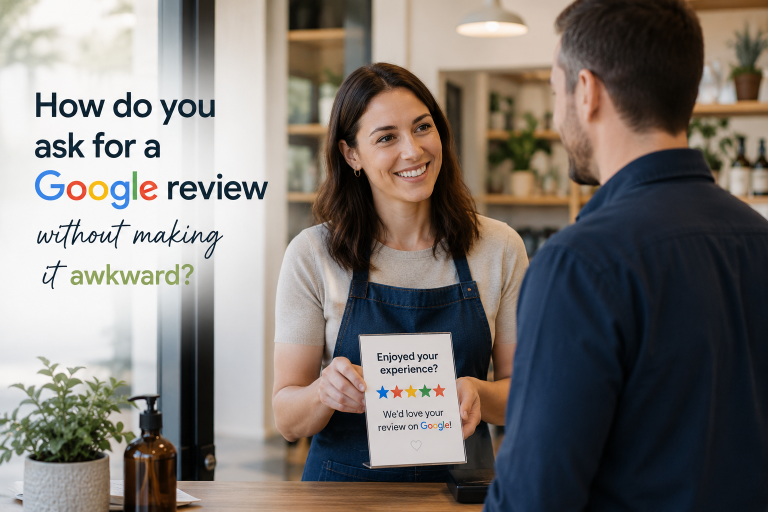
The right moment is the first natural pause after the customer has seen the result and expressed satisfaction. That might happen at a final walk-through, after a regular customer offers a compliment, or when a project is formally closed. Ask then, but let the review happen later. Holding out a phone and watching someone type turns a simple invitation into pressure.
The moment changes with the work. These lines are starting points, not scripts to recite:
The words should sound like the person saying them. Keep the shape of the request, then use language that belongs in the customer relationship.
A good request acknowledges the result, asks for an honest review, and offers an easy link. It does not name the rating wanted. It does not tell the customer what to write. It also gives them a clean way to decline without having to explain themselves.
One line is enough: 'Thanks for choosing us. If you would be comfortable sharing your experience in an honest Google review, I can send you the link.' The phrase 'if you would be comfortable' does useful work. It makes the request optional before the customer has to make it optional themselves.
Google's current Maps policy allows businesses to ask for reviews based on genuine experiences. It does not allow incentives, selective requests for positive reviews, pressure to review while still on the premises, or instructions to include specific content. That means no request for five stars, no request to name a staff member, and no discount for posting.
Customers know reviews help. Do not make that benefit their burden. 'It helps other people know what to expect' is enough.
A verbal yes is not a promise. The customer may leave with every intention of writing a review, then return to work, dinner, or school pickup. Send the link the same day or the next morning, while the visit or job is still easy to remember. The message should identify the business and make the action clear in one screen.
A useful follow-up reads: 'Thanks again for choosing [business]. If you still have a minute to share your experience, here is our Google review link: [link]. No need to reply.' It reminds without accusing. It also avoids asking for praise or prescribing the content.
One reminder is enough. If the customer does not act, let it go. A second or third chase changes the meaning of the exchange. The aim is a genuine account, not completion of a task assigned by the business.
The verbal request should come from the person who earned the customer's trust. A technician, practitioner, stylist, adviser, or account manager can connect the request to the work that just finished. An office administrator can send the link after that introduction. The handover feels natural because the customer knows why the message arrived.
A request from an unfamiliar marketing address has none of that context. It looks like a campaign, even when the wording is polite. The person who did the work can name it and choose the right moment.
Do not turn staff into review collectors. Google's current policy lists staff quotas for soliciting a set number of reviews as rating manipulation. A better measure is whether the team used the neutral request at the agreed completion point. Review numbers will vary because customers remain free to decline.
The rules are easier to follow when the request stays neutral and connected to a real experience. Problems start when the business tries to control who is asked, what they say, or what they receive in return.
The companion guide to getting more Google reviews covers review gating, QR codes, links, replies, and the wider routine. Keep that system separate from the human ask.

Improvising under pressure makes the request harder than it needs to be. Write one sentence for the most common completion moment in the business. Save the direct review link in the phone, booking system, or job-close message. Tell staff that the goal is a neutral invitation, not a quota.
Trial the wording for two weeks and record how often the agreed moment occurred. That measure is more useful than staring at the review count, because it shows whether the process is being used without making staff responsible for the customer's choice. The wording can then be shortened until it sounds like a normal close to the service.
CJ Digital can help set up the Google Business Profile and review path, then show where the request fits in the customer handover. Start with the current review link, the point where work is marked complete, and the contact page. The sentence still needs to come from the person who earned the customer's thanks.
No. Ask for an honest Google review, not a five-star review. Google does not allow businesses to influence the rating or the content of the review.
Yes. Google allows businesses to share a direct review link or QR code. A short text or email works best after a natural verbal request or a clearly completed service.
No. The customer must be signed into a Google Account, but that account can be created with a non-Gmail email address.
No fixed rule says every customer must be asked. Google does ban selectively asking only for positive reviews or discouraging negative reviews. Use a neutral trigger, such as a completed job or appointment, rather than screening by satisfaction.
Missed updates can leave the site slower, less secure, or incompatible with newer server settings. The risk grows when the site uses many plugins, forms, payment tools, or custom features.