




An insurer referral does not replace clear information about your shop. A website can help a customer find the yard, understand the work you take and contact the right person. Repairer choice depends on the customer’s policy; the website can explain your business without promising control over the claim.
An insurer referral and a customer enquiry need different responses. A referred driver may need directions and arrival instructions. Someone paying privately may still be deciding whether you take their job. Clear information helps both without claiming that a website wins insurer work.

No. Some car insurance policies let the customer choose a repairer. Others leave that choice to the insurer. The customer needs to check their own cover.
One Australian insurer’s policy document, prepared on 1 February 2026, illustrates the difference. One of its comprehensive policies allows a choice; another allocates a repairer. Even where a customer can choose, the insurer may obtain another quote and decide to pay the reasonable repair cost instead of arranging the work.
A customer naming your shop is therefore not confirmation that the repair has been authorised. Before describing an insurance booking as confirmed, establish what has been agreed. Do not present the customer’s preference as approval of the quote.
The example does not describe every insurer or policy. Your website should not promise an unrestricted right to choose, interpret a visitor’s cover or imply an insurer agreement your shop does not hold. Direct policy questions to the customer’s insurer and their own documents.
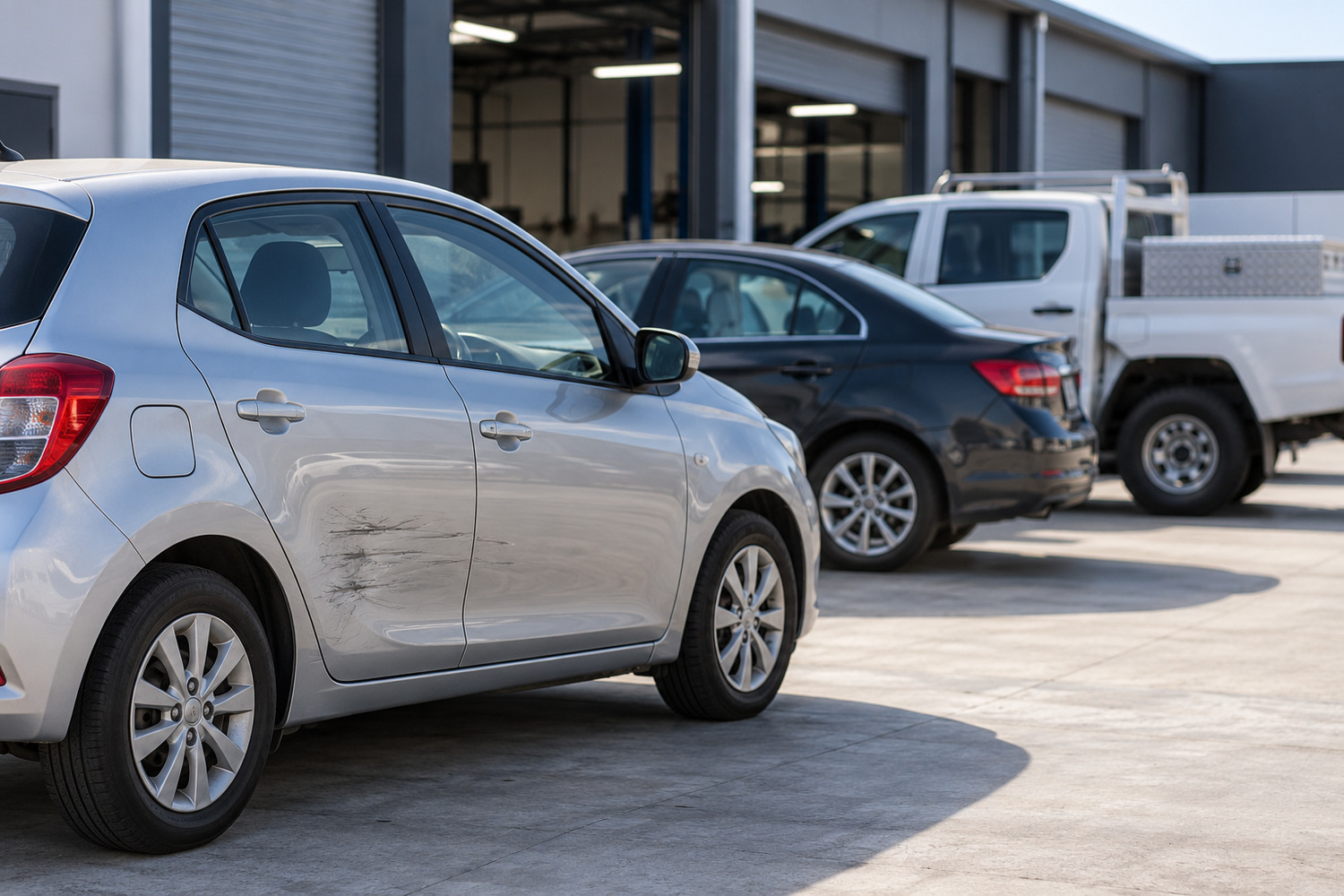
A panel shop site may need to help three different kinds of visitor.
The first has been referred. An insurer may have named your shop or agreed to the customer’s request. A driver who has never visited may want to confirm where the car is going and who will receive it. That means a street address they can picture, a name to ask for, and some sign the place repairs cars like theirs.
The second is considering paying for the repair privately: a scraped door, a dent before a sale or cosmetic work. They may be comparing shops without having lodged a claim. The service list needs to say whether you take that kind of work, rather than leaving them to assume every repair requires insurance.
The third may be a business customer: a builder, hire operator or dealership preparing cars for sale. If you accept that work, describe the relevant repairs. A visitor can then decide whether the enquiry belongs with your shop.
Give priority to the customers your shop serves. The site can distinguish insurance enquiries, private repairs and business work without making visitors decode workshop terminology. If one category is not offered, state the actual position rather than suggesting otherwise.
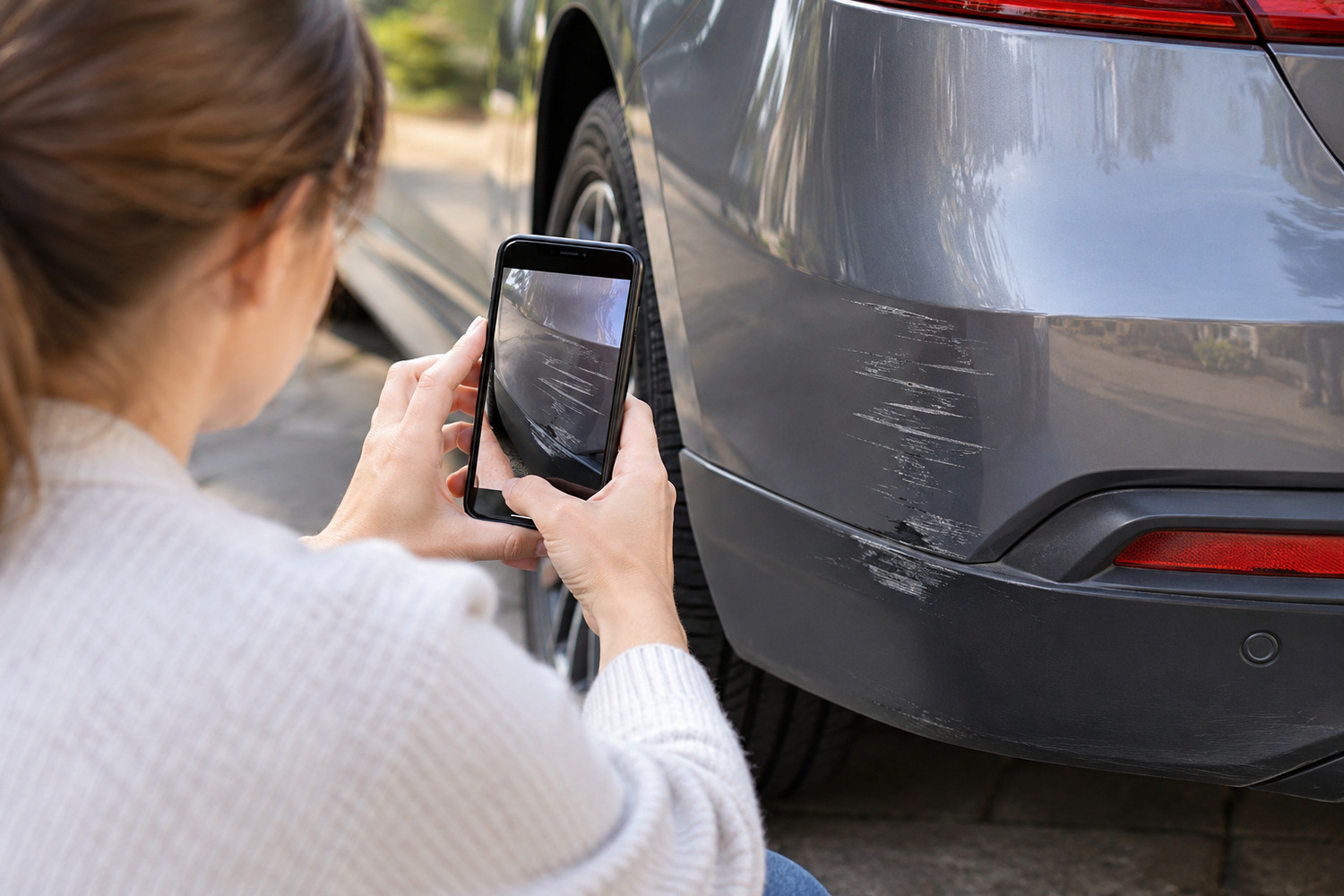
Start with the practical information the office gives a first-time visitor before they arrive.
Keep those details consistent with what the office tells customers. When an arrangement changes, update the affected page rather than leaving an old promise beside a new contact number. The aim is a usable description of your own business, not a list of every service a panel shop might offer.
For a shared driveway, a photograph taken from the street can show the entrance the address alone misses. Caption it with the business name and the place customers should report. If a car must be delivered to a different entrance, explain that arrangement separately. Use the instructions the office gives, including any need to arrange arrival first.
Keep an invitation to enquire separate from a confirmed appointment. A customer sending damage photographs may still need to discuss whether the shop can take the repair. Where that distinction applies, make it clear before the visitor sets off. The website should support the booking conversation, without suggesting that sending a photograph authorises work.
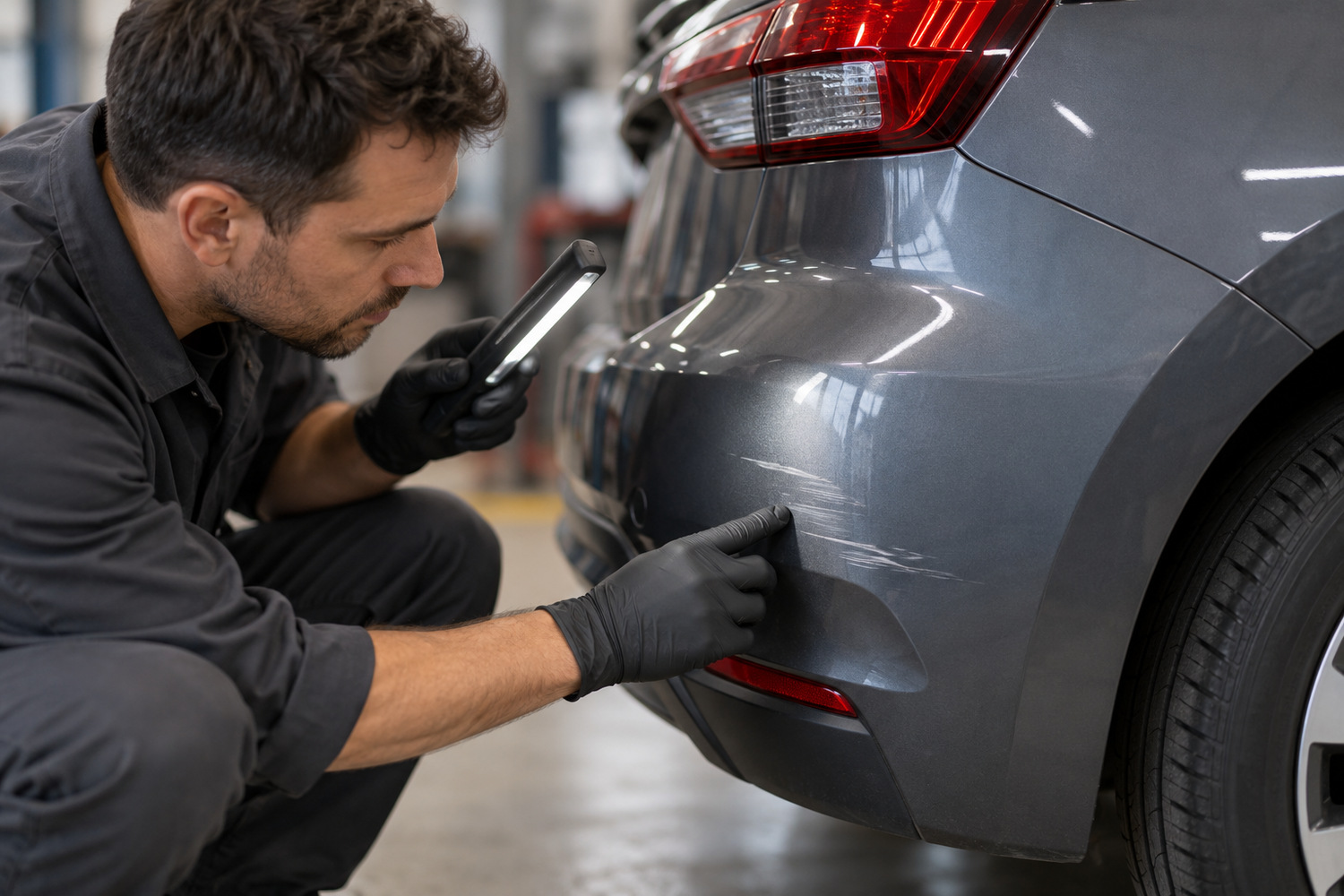
List the private and business work the shop accepts, alongside its insurance enquiries.
If you accept private repairs, name them plainly. That might mean a single panel or a bumper scuff before a lease handover. Respray work, restoration and fleet repairs belong on the list only if the shop takes them. Those descriptions help a prospective customer decide whether to make an enquiry. They do not guarantee that an enquiry becomes an accepted job.
Describe all-makes repairs or work with all insurers only if those claims are accurate for the shop. Any manufacturer approval also needs to be real and current.
Australian Consumer Law prohibits false or misleading representations about services and approvals in trade or commerce. Keep the service list and any approval claims accurate, rather than borrowing wording from another workshop.
An overclaim can also bring enquiries the shop cannot accept. Staff then have to correct an expectation the website created. Looking at how other automotive sites word their service lists helps. CJ Digital’s published automotive website work is a reasonable place to start.
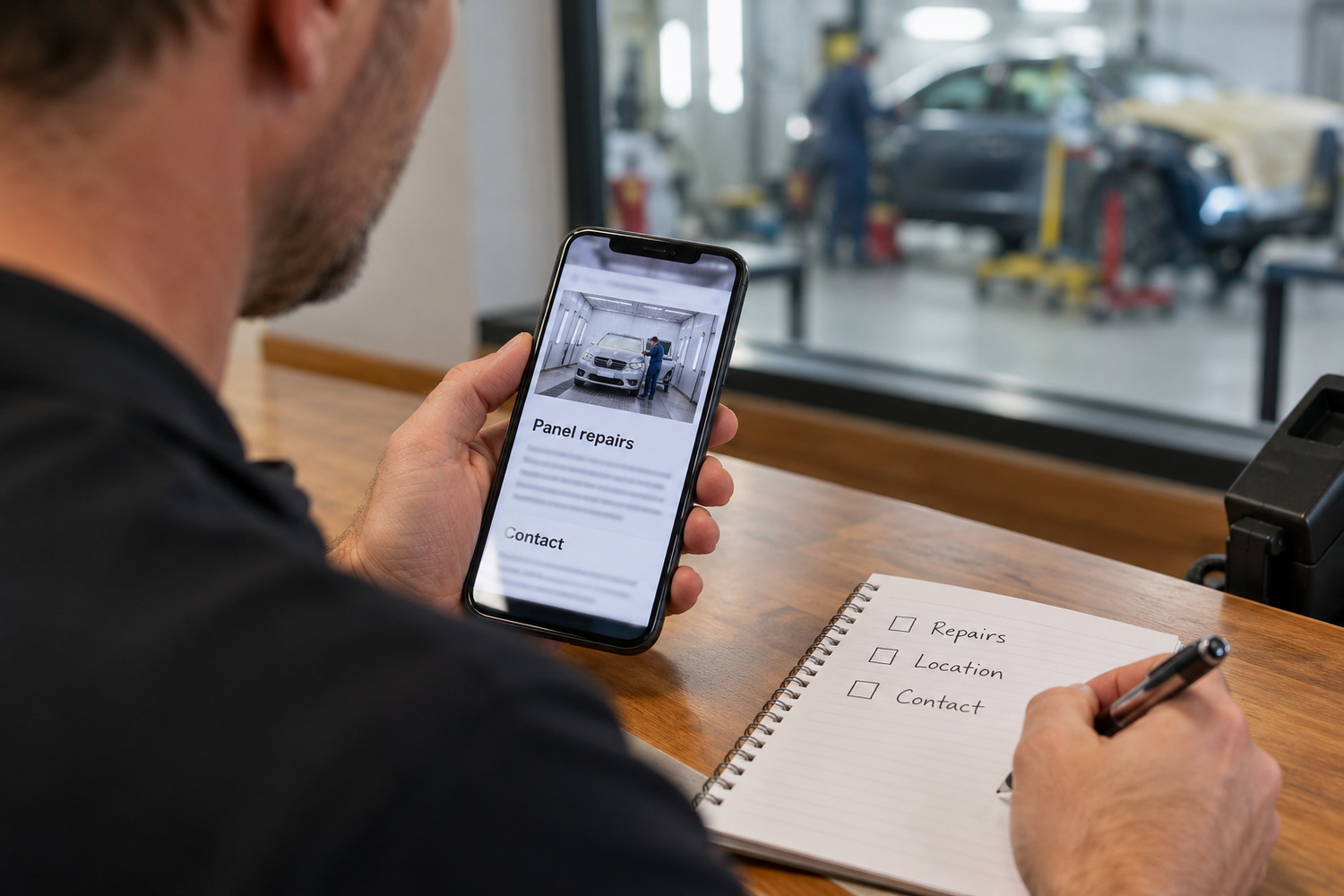
Open the home page on a phone and read the first screen as somebody who has just been handed your name.
Check three things: what the business repairs, where it is and what the visitor should do next. A photograph and slogan do not answer those on their own. Read the visible text and follow the contact route, rather than judging the page only by its appearance.
Now read it again as the second visitor, the one paying for their own repair. They need a reason to pick you. The reason is specific work described plainly, not an adjective about quality.
Then read it as a business customer. Can they tell which vehicles and jobs you accept, and who discusses the work? Accepting a business enquiry does not necessarily mean the shop can repair several vehicles at once.
An existing site may already supply those answers. It may need a corrected entrance photograph or contact detail rather than a new build. Judge the missing information before deciding how much work to commission. Ask somebody unfamiliar with the premises to follow the directions; they may notice a missing gate or arrival instruction.
Mark each missing or unclear answer on the page before commissioning changes. Keep accurate information, replace vague claims and correct the contact route where needed. A page that answers those questions can still have other barriers to enquiries. The separate discussion of customer enquiries from a workshop website examines that broader problem.
No. Repairer choice depends on the insurance policy and its conditions. A customer naming a shop is not the same as an authorised repair. They need to check their own cover.
Explain the actual arrangement and whether availability needs confirmation. Do not promise a car for every repair if one cannot be supplied. Customers need to agree the position before arrival.
No. Naming repairs the shop does not take brings in enquiries somebody has to turn away. What a business publishes about its services also has to be accurate.
What the shop repairs, where it is and the next step to take. A visitor referred by an insurer may need those details just as much as someone comparing shops.