

Your workshop website can help a mechanic decide whether to apply for a job. A clear careers page shows the work, the team and the terms behind the vacancy. A separate job page explains the open role and how to apply. Link to that information from your advertisement so an interested mechanic can take the next step.
For an independent workshop owner, the question is whether the site gives a useful picture of working there. A list of customer services does not explain the job. A mechanic needs to understand what they would do, who they would work with and whether the role suits them. A website can help answer those questions, without replacing recruitment or promising to fill the vacancy.

No. Use the advertisement to promote the vacancy and the website to explain the workplace in more detail. The two should give a consistent account of the same job.
A short advertisement might name the role, location and application deadline. The linked page can show the workshop, describe the work and explain the arrangements you are offering. Someone interested in the advertisement then has a clear place to find more information.
That does not mean every applicant will visit your site. It means the information is available to those who do. The page can also help someone following a referral or hearing about the workshop between advertised vacancies.

Show the work a mechanic would do and the people they would work beside. Replace broad descriptions such as varied work or a friendly team with details the workshop can support.
Useful information includes:
These details let an applicant judge the fit. A technician seeking diagnostic work needs more than a general claim that the workshop repairs all makes. Describe the work available without promising tasks the role does not include.
Consider a hypothetical Melbourne workshop. Its careers page says that the role combines routine servicing with diagnostics, reports to the workshop manager and works alongside apprentices. Another page says only great opportunities in a busy workshop. The first gives a mechanic something specific to consider before deciding whether to apply.
Use your own photographs rather than images that could belong to any workshop. An employee comment can add a personal view if it is genuine and published with permission. Do not invent a testimonial. CJ Digital’s published automotive work offers examples of how workshop businesses present themselves online.

State the arrangements you have agreed to offer. Explain what phrases such as competitive pay or training opportunities mean for this particular role.
Describe the hours and any Saturday roster. Explain the overtime arrangement and any tools, uniform or training support you have committed to. If you publish a pay figure, it must reflect the actual offer. Leave out a course, benefit or apprenticeship arrangement that has not been settled.
A specific arrangement is more useful than a slogan. For example, a hypothetical employer offering a nine-day fortnight can explain which day is off. That is information an applicant can assess, not a claim about every workshop or an entitlement created by the website.
Australian Consumer Law prohibits misleading conduct about employment, including its availability, nature and terms. Accurate copy matters, but a website description is not a substitute for checking the employer’s obligations. Google’s job posting policies also require truthful employer information.
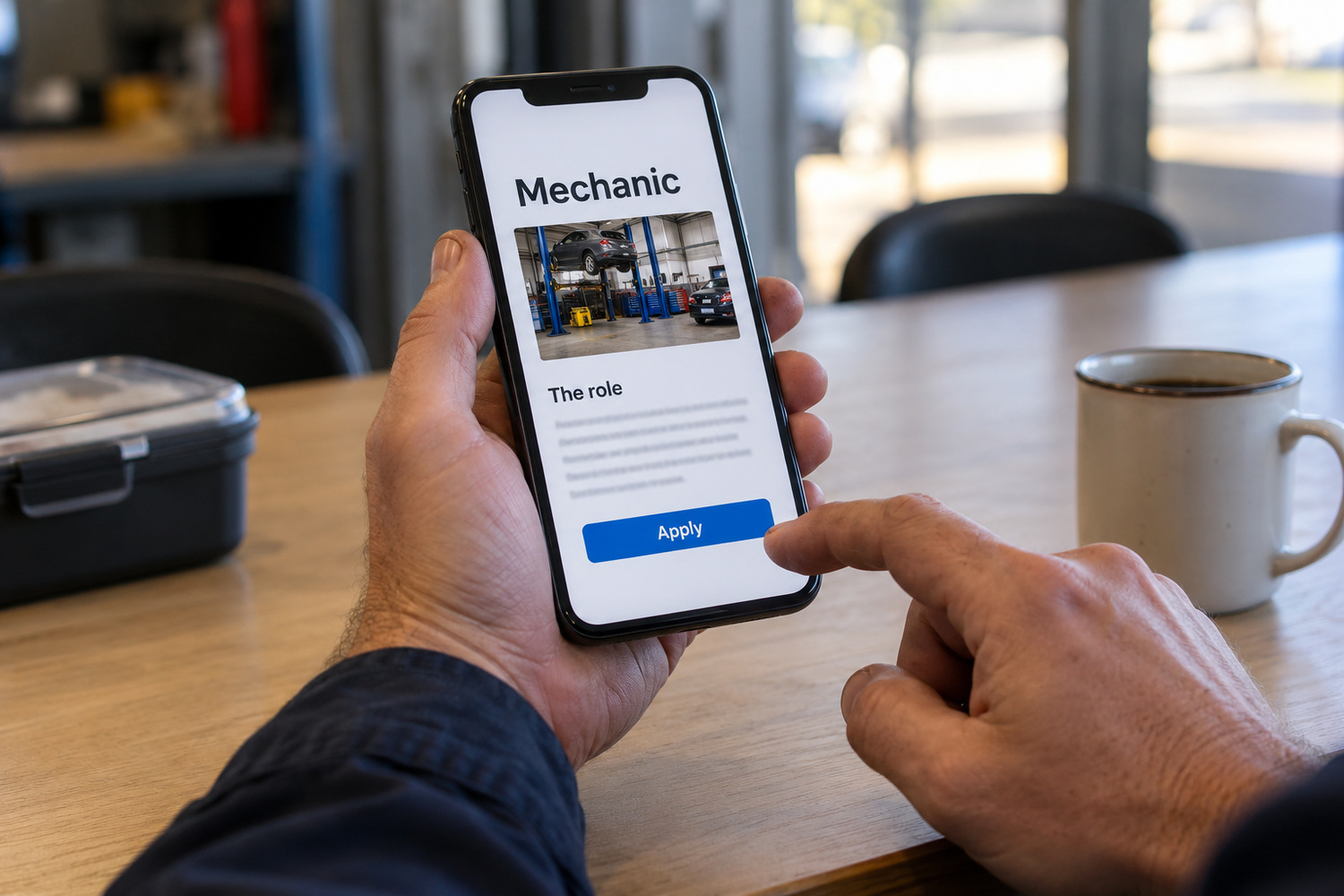
A page for the open role keeps the job details and application route together. Keep it distinct from the general careers page, so one vacancy can close without removing the workplace information.
Describe the position and the qualifications it needs. Give applicants a clear way to apply and let them read the details without a login. Google’s job posting guidance requires these details for its job search feature. They are also useful checks for an ordinary vacancy page.
Some job pages use structured data: code that helps a search engine understand the vacancy. Google’s rules put that code on the page for one job, rather than on a list of jobs or a general careers page. It does not guarantee visibility or applicants.
Assign someone to close the vacancy when it is filled. Remove it from current vacancies and make its status clear wherever it remains visible. For Google’s job search feature, the website manager can remove the page, remove its job posting code or set its closing date in the past. Leaving a filled role looking open wastes an applicant’s time.
The lasting careers page can still describe the workshop and its hiring process. It should not imply a job is available when none is open.

Follow the route from your job advertisement to your website on a phone. Can a mechanic find the role, understand the workplace and reach a working application method?
Start with the gap that stops that route. If the page is all adjectives, replace one with a supported workplace detail. If there is no employment information, plan a careers page. If an application goes to an unchecked inbox, assign someone to receive and answer it. Test the route before sending applicants to it.
Customer enquiries are a separate job. Our advice on customer calls from a workshop website covers that side of the site. Here the visitor is deciding whether to work with you, rather than book a repair.
You may only need to update the copy or fix an application link. A site that cannot clearly separate workplace information from current jobs needs more thought about its pages and how they are maintained. That is a useful brief for website work, rather than a request to make the site look newer.
Use your current advertisement and the gaps you found to brief the website work. Our web design and development page explains how planning, design, content and support fit together. Agree which pages need work, how applicants will get in touch and who will keep the vacancies current.
Describe the actual work, team and workplace, with genuine photographs where useful. Keep that lasting information separate from the details of a particular vacancy, and make it clear when no job is open.
A separate page keeps each role’s requirements and application route together. If job posting structured data is used, Google requires it on a page describing one job, rather than a general jobs list.
Leave out unagreed benefits, invented staff comments and claims about the work that the role cannot meet. Specific terms should describe the employer’s real offer, rather than an attractive possibility.
Remove it from current vacancies when the role is filled. If the page remains as an archive, clearly mark it closed and have its job posting code or expiry handled so it is not presented as an open job.