





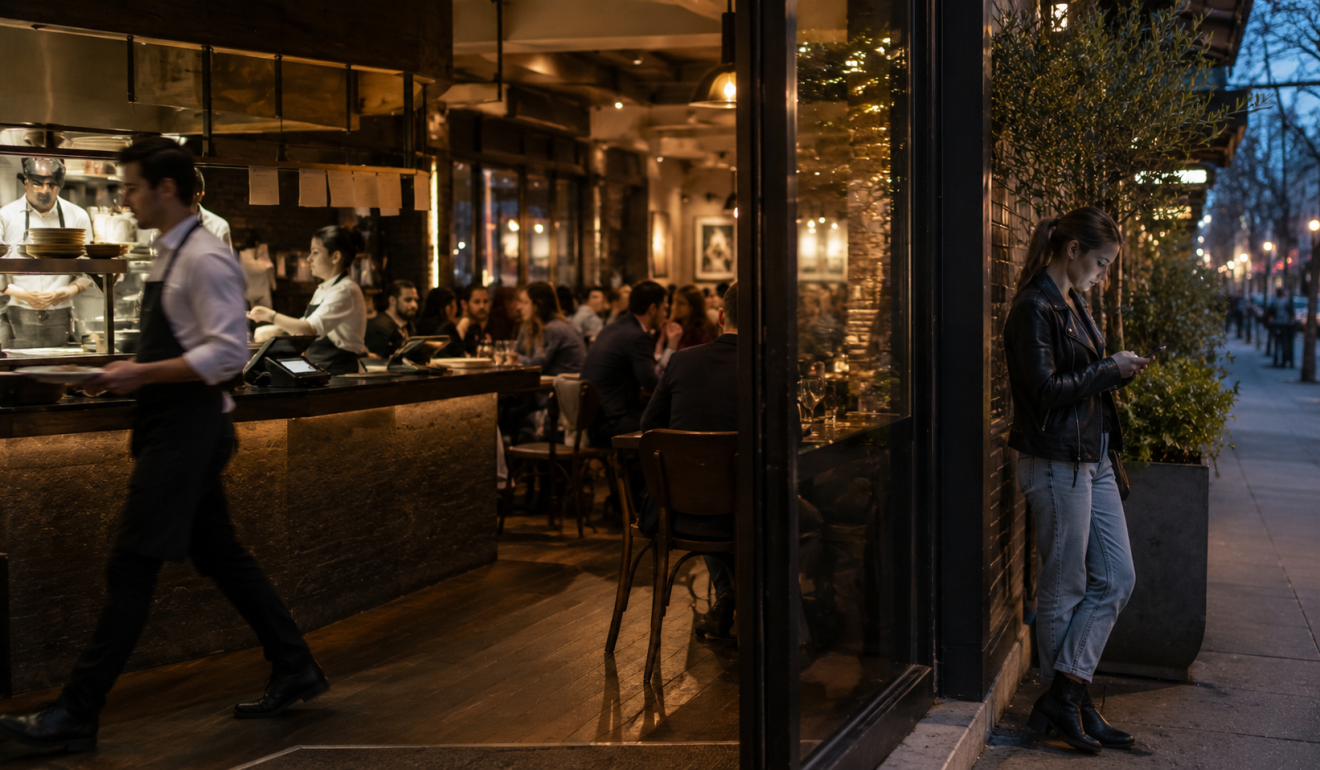
At 6.45 pm on a Friday, a couple outside a Lygon Street restaurant checks whether the kitchen can handle a dairy-free order. The phone rings behind a full pass, and nobody can leave the floor to answer it. The website offers an old PDF menu, while Instagram shows a special from last summer. They walk two doors down, where the answer and booking button are both clear.
A restaurant website earns its place by answering the questions staff cannot stop to handle during service. It should be the dependable record of the current menu, trading hours, booking path, location, access, and dining offer. Google, Instagram, booking tools, and delivery apps can carry parts of that information, but none should be the only place where the venue's basic facts live.
That changes the brief from a gallery of food photos to a working part of front-of-house.
A restaurant website has a short list of operational jobs. Each one removes a question, a wrong turn, or a dead end before it reaches the floor team. A polished design helps, but accuracy and a clear next action carry more weight during a busy service.
The same page does not need to carry every function. A cafe built around walk-ins may lead with hours, menu, and takeaway. A table-service restaurant may put bookings first. A venue with private events may give group enquiries their own page and form.
The website should own the stable facts and the route to the right action. Platforms should handle the tasks they were built for, such as live availability, delivery fulfilment, maps, or fast updates from the floor. Trouble starts when the same menu, hours, and offer must be maintained independently in five places.
| Channel | Best job | Do not rely on it for |
|---|---|---|
| Website | The source of truth for menu, hours, access, dining style, groups, and direct links | Live table inventory or delivery logistics unless those systems are properly connected |
| Google Business Profile | Maps, current hours, menu links, photos, reservations, and food-ordering links | The full dining story or detailed policies that need room and context |
| OpenTable or SevenRooms | Live reservations, waitlists, confirmations, deposits, and guest management | Explaining the whole venue to someone who has not chosen it yet |
| Uber Eats or DoorDash | Marketplace reach, pickup, delivery orders, and delivery fulfilment | Representing the dine-in experience or holding the only current menu |
| Instagram and social channels | Daily specials, atmosphere, events, and service updates | Permanent facts that must still be easy to find months later |
That division also protects the venue when one platform changes its product, pricing, reach, or terms. The website can keep pointing to the current booking and ordering choices without a redesign. It remains the fixed address while the tools behind the buttons change.
Hospitality businesses on a busy strip have another reason to keep that fixed address strong. A person standing nearby may move from a map listing to a menu, then to a booking system within a minute. Every hand-off needs to land on the same hours, offer, and policy.
An opening-day website freezes the venue at one moment. The launch menu stays online after the kitchen has changed direction, the gallery shows a fit-out before the room filled with life, and an old special keeps appearing after the event has ended. None of these faults looks serious on its own. Together, they make the venue hard to trust because the basic facts no longer agree.
PDF menus cause a common version of the problem. A PDF can be useful for printing, but it is weak as the only menu on a phone. Small type, wide columns, and image-based pages force pinching and scrolling. A text menu is easier to read, edit, link, and keep in step with the kitchen, while the PDF can remain as a secondary option.
Hours create the sharper failure. A venue can have one closing time on its website, another on Google, and a third inside a booking platform. The right answer may also depend on the question. The bar may trade until 11 pm, the kitchen may close at 9.30 pm, and takeaway may finish earlier. One line marked "open until 11" does not explain that.
The phone then becomes the fallback for every missing detail, at the exact time staff are least able to answer. A phone number is not a booking system or an access page. If calls are repeatedly missed, route routine questions to a clear booking link, a current recorded message, a human answering service, or an AI receptionist. An AI receptionist is useful only when it has approved hours, policies, booking limits, and handover rules. It should not promise a table, allergy accommodation, or group booking that the venue has not confirmed.
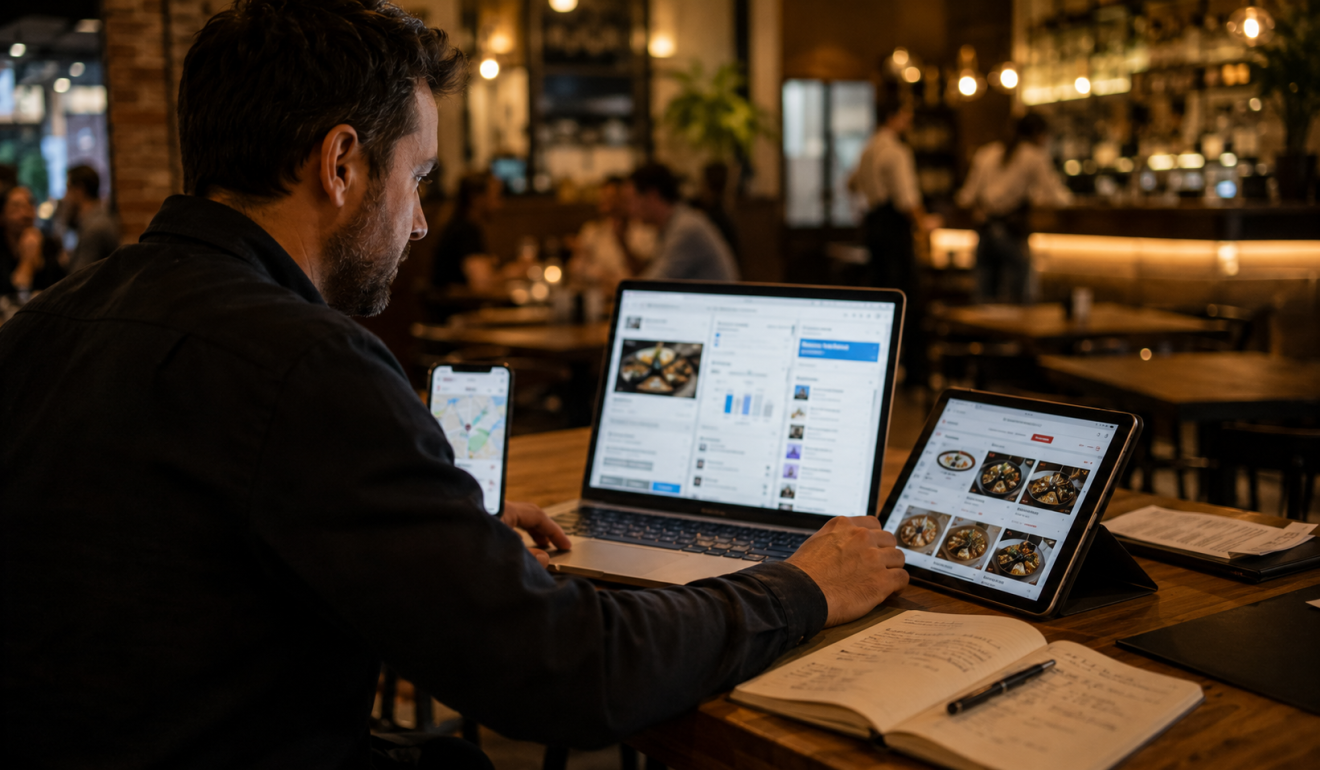
The useful restaurant website is usually smaller than the one imagined at opening. On a phone, the first screen needs the venue name, current status, address, and the main action. That action might be Book a table, View the menu, Order pickup, or Join the waitlist. Four equal buttons create a choice problem when one of them matters far more.
The next priority is content that prevents a failed visit. State the kitchen hours, booking rules, dietary approach, group limits, accessibility, parking, and entrance details in plain language. Use real photographs of the room, tables, frontage, and food. A diner should know the difference between a quick counter-service cafe, a long lunch, and a set-menu evening before committing.
The site can skip most decorative motion, a huge gallery, a long chef biography on the home page, and a news section nobody has time to update. The story still matters, but it should explain the food, room, and point of view in a few useful paragraphs. It should not block the booking path. The same goes for delivery: do not rebuild a complete ordering system on the site when a connected platform already handles it well.
Keeping the site current needs an owner and a routine. Menu and hour changes should go live when the change begins, not at the next redesign. A monthly ten-minute check catches dead booking links, expired events, and old public holiday notices. Where nobody inside the venue can own that task, ongoing website support is more useful than adding another feature.
A restaurant website supports search by making its core facts easy for Google to read and compare with the Business Profile. Google lets restaurants manage hours, menu content, menu URLs, booking links, ordering links, and waitlists through the profile. The website should carry the fuller version of those facts and send each action to the preferred provider.
The technical layer can reinforce the same information. Local Business structured data can identify the venue as a restaurant and mark up its address, phone number, cuisine, price range, opening hours, and menu URL. That code does not rescue stale content, but it gives Google a clean description of information already visible on the page.
Google says its generative AI search features draw on content in the Search index. A menu, booking policy, private dining page, and access information written as ordinary web text give those systems clear material to quote. Facts buried in an old social post, an unreadable image, or an unlinked PDF are harder to use with confidence.
The goal is not to write for a machine instead of a customer. It is to state the same useful information clearly enough for both. A direct answer to "Do you take groups of 12?" helps the person planning dinner and gives Google a citable answer. The venue benefits from the same piece of work twice.
The platform mix does not stay fixed. Quandoo has announced a phased closure, with its service available only until 30 September 2026. Any venue that treated its profile as the main booking address now has to move links, availability, and customer habits elsewhere.
A restaurant with a current website can change one booking link and keep the public address intact. A restaurant built around the platform has a larger repair job because the menu, reviews, booking path, and venue story may all have been concentrated there. That is the practical reason to let platforms do their specialist jobs without handing them the whole business identity.
Before rebuilding, write down one source of truth for the menu, hours, bookings, ordering, access, and group enquiries. CJ Digital can turn that into a restaurant or cafe website that links the right systems without making staff maintain the same facts five times. Send the current menu, booking link, and three most common service-time questions through the contact form.
Not always. A walk-in cafe may be better served by clear hours, queue information, takeaway details, and a current menu. Online bookings become more useful when tables are limited, sittings are timed, or groups need to be managed before arrival.
Use a web page as the main menu and keep a PDF as an optional printable version. Web text is easier to read on a phone, update quickly, link from Google, and present to search systems. A PDF still helps when the design or print layout matters.
Use the channel that fits the venue's operations. Marketplaces such as Uber Eats and DoorDash can provide app reach and delivery fulfilment. Direct ordering can keep the restaurant website central, but it still needs reliable payment, order, and delivery systems behind it.
No. Instagram is strong for atmosphere, specials, and current service updates, but weak as the permanent record of hours, menu, access, and booking rules. Old posts remain visible, links are limited, and important facts can be hard to find.
An AI receptionist can handle approved routine questions such as hours, directions, parking, booking links, and basic group policies. It should hand over anything involving allergies, complaints, unusual requests, live table promises, or decisions the venue has not authorised.