




Web design for a Brunswick business should help a stranger judge whether its work fits their job. Describe the specific service and show a genuine example with enough context to explain it. The same advice applies to other busy Melbourne strips with heavy foot traffic and limited parking.
Consider a hypothetical customer with a dining chair whose back leg is split. Two workshops along Sydney Road might take the repair. Before travelling, the customer could compare their websites to see whether either explains this kind of work. A service label and a photograph may help, but neither necessarily says what was repaired or what the workshop takes on now.

A customer considering a specialist job needs to establish whether the business takes that work before deciding to visit.
That is a different thing from finding the nearest open door. The reader has something particular in mind. It might be a made-to-order piece, or a specialist service. They are working out which business is the right one for it. In the chair example, both workshops are open and both are reachable. The customer still needs to establish which workshop offers the relevant work and has explained it clearly.
Not every visit starts this way. For the customer comparing workshops from home, though, the page needs to explain the offer without someone at the counter filling in the gaps.
Last year, in April 2025, a council-backed event brought Sydney Road traders together to consider their shopfronts. The advice reported from it was to see the business as a customer sees it, and to make the particular offer clear. The event concerned shopfronts. Its question is useful online too: can a stranger tell what is on offer? A window speaks to somebody already outside. A website speaks to somebody still deciding.
A precise offer and a relevant example help somebody judge the work. Hours and contact details answer the practical questions around a visit.
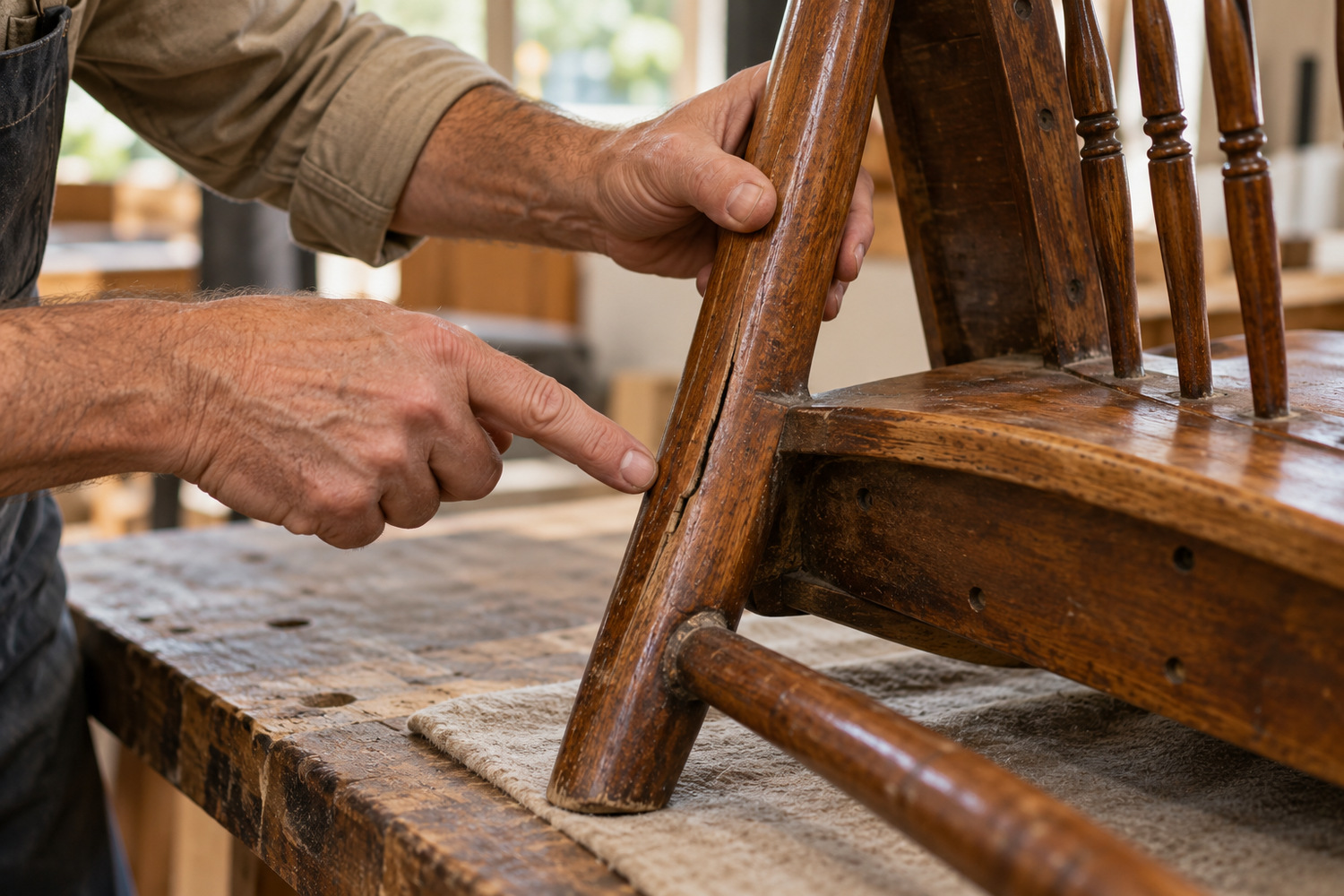
A service label can name the category without describing the particular work.
“Furniture repairs” covers gluing a loose joint and rebuilding a frame from scratch. A reader with a split chair leg cannot tell which from those two words, so they go and look at the pictures. A polished gallery can leave that question unanswered. A finished item in good light shows what it looks like, not what was done to it.
Describe one piece of work with three points:
The limits matter as much as the description. Saying which jobs the workshop takes and which it turns away gives a prospective customer something specific to compare with their own request. It can also reduce misunderstandings about what is offered.
Length is not the test. A short account that identifies the work and its limits gives a reader more to assess than a string of captions that only names finished items.
Be precise about the business’s part in a larger job. An image of a whole finished room, for example, need not mean the workshop made everything in it. If its work was one repaired chair, identify that contribution. The surrounding furniture can provide context without becoming a claim about services the business supplied. This is the same discipline as naming what the example covers: the photograph should not leave a reader to assign the whole project to the wrong business.

Compare two fictional captions for the same imagined photograph. Neither describes a real business or customer.
The first reads: “Dining chair restoration. Another happy customer.”
The second reads: “A 1950s kitchen chair with a split through the back leg. We cut out the broken section, let in new timber of the same type, and matched the finish. The repair shows from underneath. We do not re-cane seats.”
The photograph is identical. The second caption gives a reader something to judge. It names the fault, giving someone with a similar problem a useful point of comparison. It describes what the workshop says it did and states where the repair remains visible. It also identifies a service that is not offered, rather than leaving the reader to assume it is.
A photograph on its own settles less than it appears to. It does not establish who did the work. It does not mean every job like it is accepted. It does not show that an item is in stock, or that the same result is promised next time. The description needs to supply the relevant context rather than leave the picture to imply it.
These captions demonstrate a difference in information, not evidence of repair skill. On a real site, use genuine work the owner is free to show and describe it truthfully.
Keep a description of the job separate from a claim about what the photograph proves. In this hypothetical example, the caption describes a repair process, but the finished photograph cannot verify every step. If the image only shows the finished chair, do not present it as a record of the work in progress. The reader should be able to tell which information comes from the image and which comes from the workshop’s account.
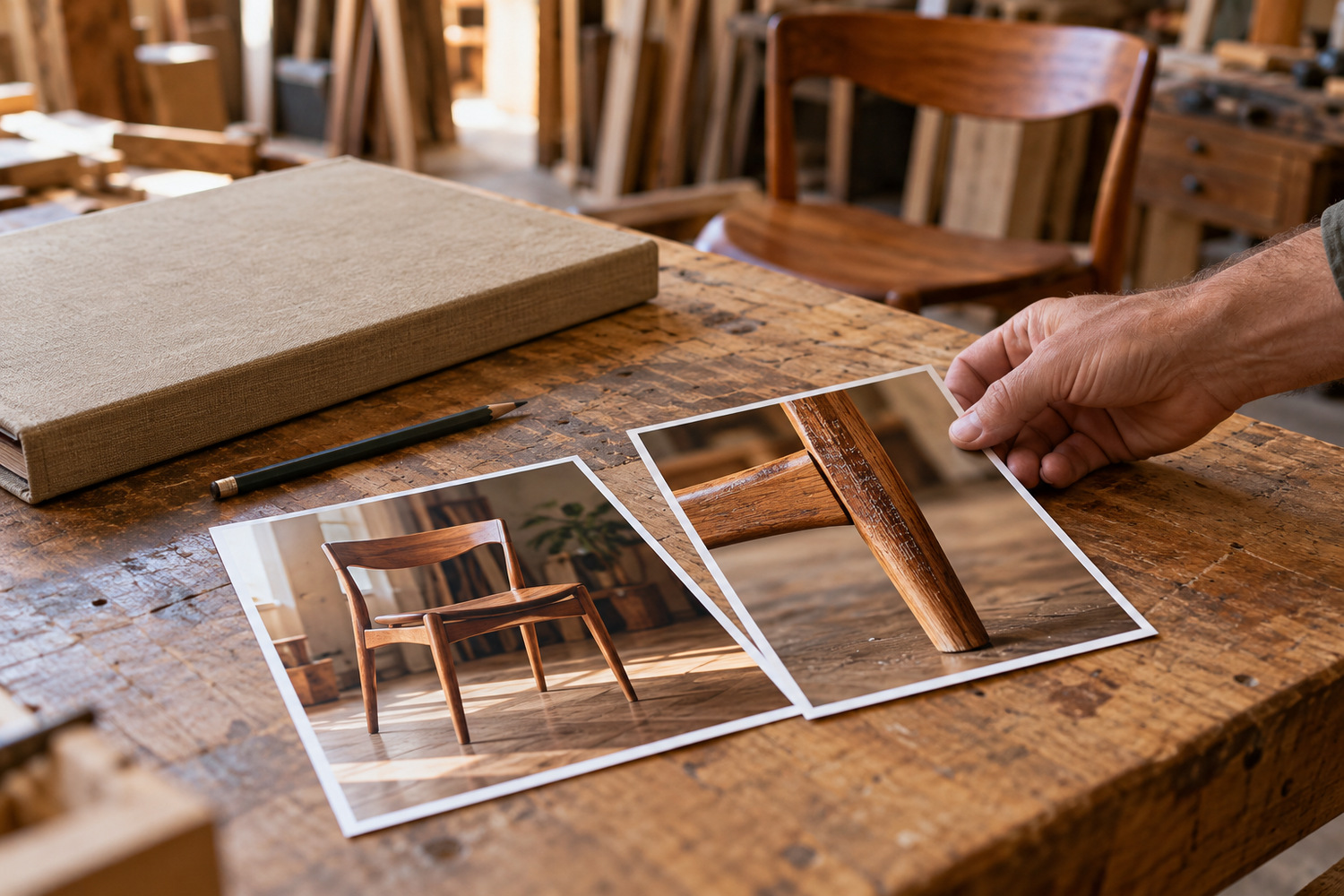
Choose examples that explain the speciality, rather than filling a gallery with every completed item.
A gallery might mix repairs, newly made items and finishing work. Group or label those examples so a reader can see which service each illustrates. Organise the examples around what the work involved, rather than assuming that every attractive finished item answers the same question.
An example records something that was made. A page can turn it into a promise that the same thing can be ordered again. Those are separate facts, and they belong in separate sentences. Say what was made, and say what is on offer now, in plain words.
A work-example page need not be a stock list, an online checkout or a catalogue of every product and size. A workshop that makes things to order has an offer that is easier to describe than to list. Describing it is the work.

Keep the next step easy to find alongside a clear explanation of the work.
Once a reader has decided the work is right, the page should make the next step obvious. What is on offer now, how to arrange it, and what happens after they send a message or ring. Those details are short, and they are often the part of the page a reader needs twice.
Keep the current contact or appointment route beside the offer, then check it when that offer changes. It should support the next step without replacing an explanation of the work itself.

Try this on your own site, with one service you would like more of.
Find the place where that service is explained. Then find the example that shows it. Read the two together as a stranger would. Can they tell what the work involved, and what the example does not cover? If the page only asks to be trusted, it has given them nothing to weigh up.
Keeping that material current matters as much as writing it. The work changes, a service gets dropped, and the best example from two years ago stops being the right one. CJ Digital’s web design service builds on WordPress and includes a training session. The words and the pictures can then be changed by whoever knows the work.
For decisions about local visibility or pages for other areas, read the advice on covering nearby suburbs. Keep that question separate from how you describe a piece of work.
Write a single paragraph about a completed job that represents work you still want to take on. Name the fault or the request, what you did, and what you would not take on. Place that account beside the relevant service description, then check whether the two describe the same offer. A useful page should let the reader connect them without inventing missing details.
It can stay if it truthfully records the earlier work and the page makes today’s offer clear. An old photograph does not prove a current capability. Keep it from reading as an invitation to order something the business no longer takes on.
A written account can explain what was done when a photograph cannot be shown. An image can add visible detail, such as the finished appearance. Use each for what it can support rather than treating either as proof of the whole process.
Put the relevant example beside the service description, or give a clear route between them. A separate gallery can hold more work, but the reader should not have to guess which service an image illustrates.