




A tyre shop’s website should distinguish the brands it carries from the tyres it can source and the stock it has confirmed. A range page alone does not establish that a particular tyre is available for a customer’s vehicle today. It should explain the shop’s real services and give buyers a clear way to confirm their needs with a fitter.

A brand name does not establish which tyre suits a particular vehicle. Before a buyer speaks to a fitter, the page can explain whether the shop handles the relevant vehicle and fitting work.
Give buyers three useful points to check:
For example, someone seeking tyres for a van may need to know whether the shop handles light commercial vehicles. A customer asking about trailer tyres needs a similarly clear description. Those service details help identify a relevant shop; they do not decide tyre suitability.
State relevant limits as well. If the shop does not handle truck tyres, say so. A buyer can then check whether the service is relevant before enquiring.
Direct the buyer to a fitter to confirm the particular requirement. The page can establish that the shop handles relevant work without prescribing a tyre.

Use three distinct descriptions so buyers can tell what has been checked:
Those distinctions matter when a buyer asks about a tyre they have seen on the page. The shop still needs to establish which tyre is required and confirm its availability before agreeing what happens next.
Mention same-day supply only where it is a genuine arrangement the shop can support. Explain its limits and ask buyers to confirm the particular tyre and quantity. A brand listing or supplier account does not establish same-day availability for the entire range.
If a range statement carries a checked date, update it only after checking the information. A date shows when that statement was reviewed; it does not confirm current stock.
Put a clear call route beside the information that needs confirmation. Explain that the fitter may need details about the vehicle or the tyre currently fitted. The buyer should know who to contact and what remains to be checked.

Once the buyer can see a relevant service, make it clear how to confirm the details with the shop. Keep the contact route beside the range or vehicle information, rather than making someone leave the page to find it.
A claim such as “we know tyres” gives the buyer little to assess. Naming the actual fitting work and vehicle types makes the service clear; the fitter still needs to confirm the particular tyre requirement.
Show the phone number on that page and check that tapping it starts a call on a phone. Confirm that it reaches the intended shop, particularly if the business has more than one location.
If you are choosing which channels to offer, compare phone and booking forms.
Consider a hypothetical van owner. She sees a relevant brand on the page and reads that the shop fits light commercial vehicles. She still needs the fitter to confirm the tyre, its availability and a fitting appointment. The contact route should make that next step clear.
For the work after a request arrives, see handling workshop enquiries. Check that the tyre page sends the request to the right shop.
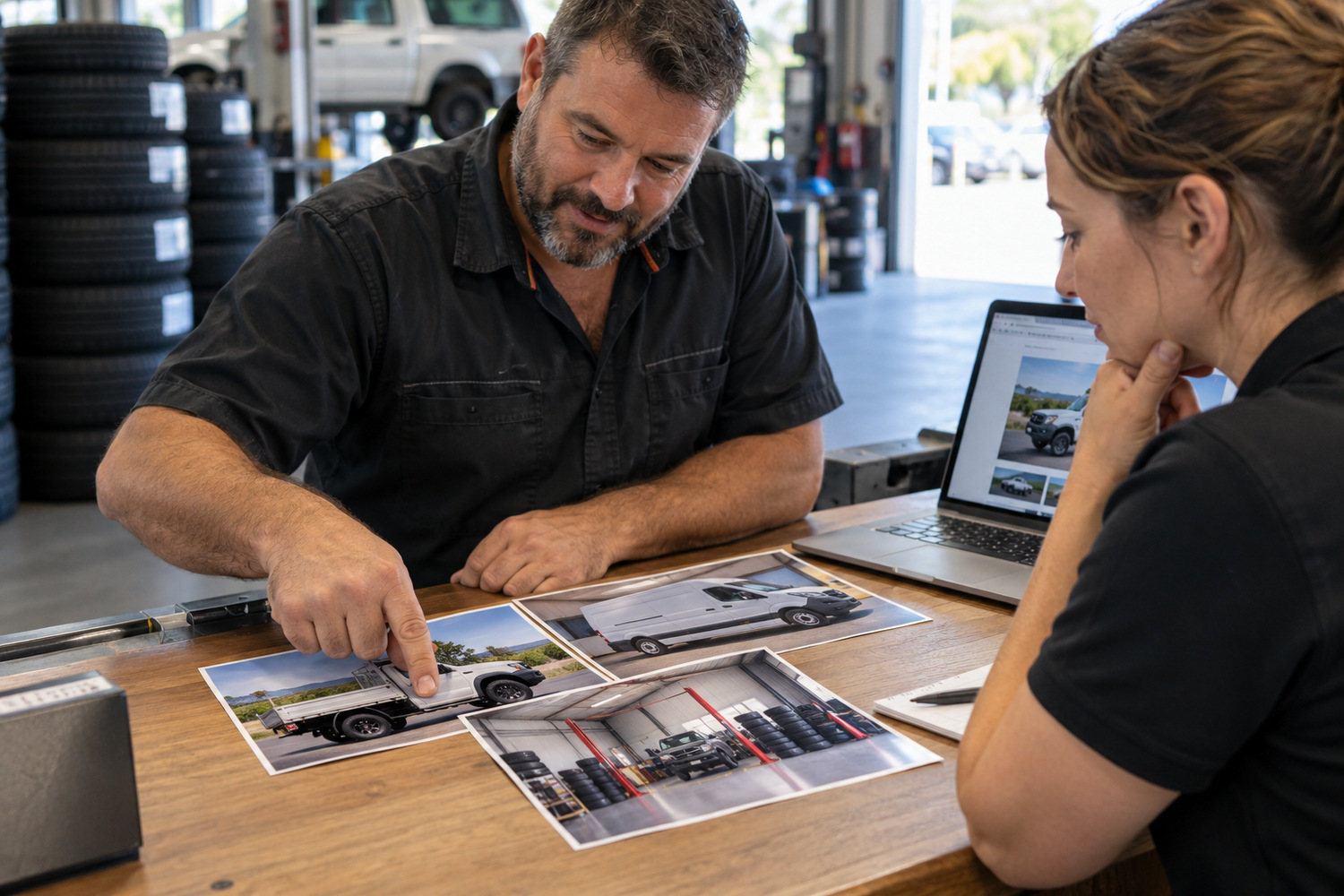
A page about one brand, or one kind of vehicle, earns its place when the shop has something real to put on it.
For a brand page, explain the range genuinely carried or sourced and the related fitting work. For a vehicle page, describe the actual services for that type of vehicle. A van, ute or trailer page should give the buyer relevant information about the shop, without prescribing a tyre or implying unsupported experience.
A page that is only a list of products is a catalogue. If the shop handles availability and fitting enquiries by phone, say so. A list of products should not imply that viewing a tyre has reserved it or arranged fitting.
Build the page around the real speciality or supply arrangement. For example, a page about ute tyres can explain the work the shop accepts and how to make an availability enquiry. Staff may still need to check the specific request with a supplier. Say what remains to be confirmed, rather than presenting a brand relationship as a guarantee.
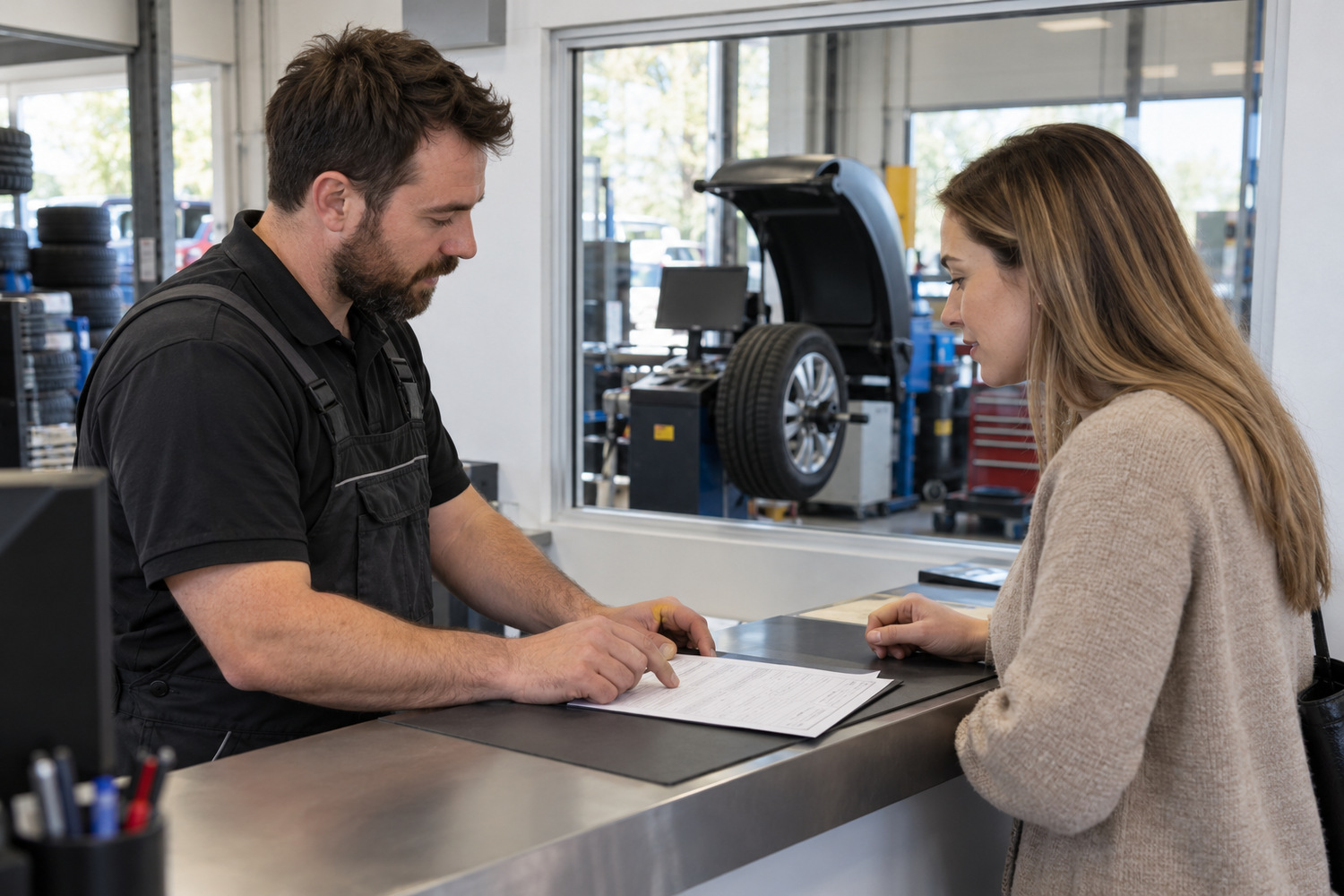
The fitting information should explain what the shop offers and which work needs a separate agreement.
Name only work the shop offers, whether fitting, balancing, wheel alignment or handling old tyres. Distinguish what is included from work arranged separately. Where work is charged separately, make that distinction clear before the customer agrees to fitting.
Avoid publishing a bundle the shop cannot always supply. State any limits beside the inclusion so a reader can see what applies.
An availability enquiry alone does not reserve a fitting time. Make the response clear: has the shop received a question, confirmed the tyres, or agreed to a fitting appointment? Use the wording that matches the actual arrangement.
An availability check and a fitting request can start through the same contact route. Explain what remains to be confirmed before fitting is agreed, rather than treating a stock question as an appointment.
Open one brand or vehicle page and follow it through to the next step. Can a buyer see how to check the particular tyre and contact the shop about fitting? If the information or route is missing, correct that gap and test the page again.
Give the person responsible for the website a short list of those gaps. Some corrections will need clearer wording rather than a new design.
Only where the arrangement is real. State its limits and ask the buyer to confirm the particular tyre and quantity. Carrying a brand does not establish same-day availability for its entire range.
List brands the shop genuinely carries or regularly sources. Distinguish those from other supply enquiries that need checking, and do not promise access to a brand without support.