






No, not every service needs its own page. Two kinds of job earn one: the jobs drivers search for by name, and the jobs that make the workshop its money. The rest can share one general services page, with a line each so a customer can see the work is offered.
Many mechanic websites have one page called Services with every job on it as a bullet point. This piece gives you the test for which jobs deserve more than a bullet. It also covers what belongs on a service page, and where more pages stop paying for themselves.
This is written for the owner of an independent workshop, with two to eight people on the tools. You do brakes, logbook servicing, roadworthies, air conditioning, auto electrical work and diagnostics. Somebody built you a website, and all six jobs sit on one page.
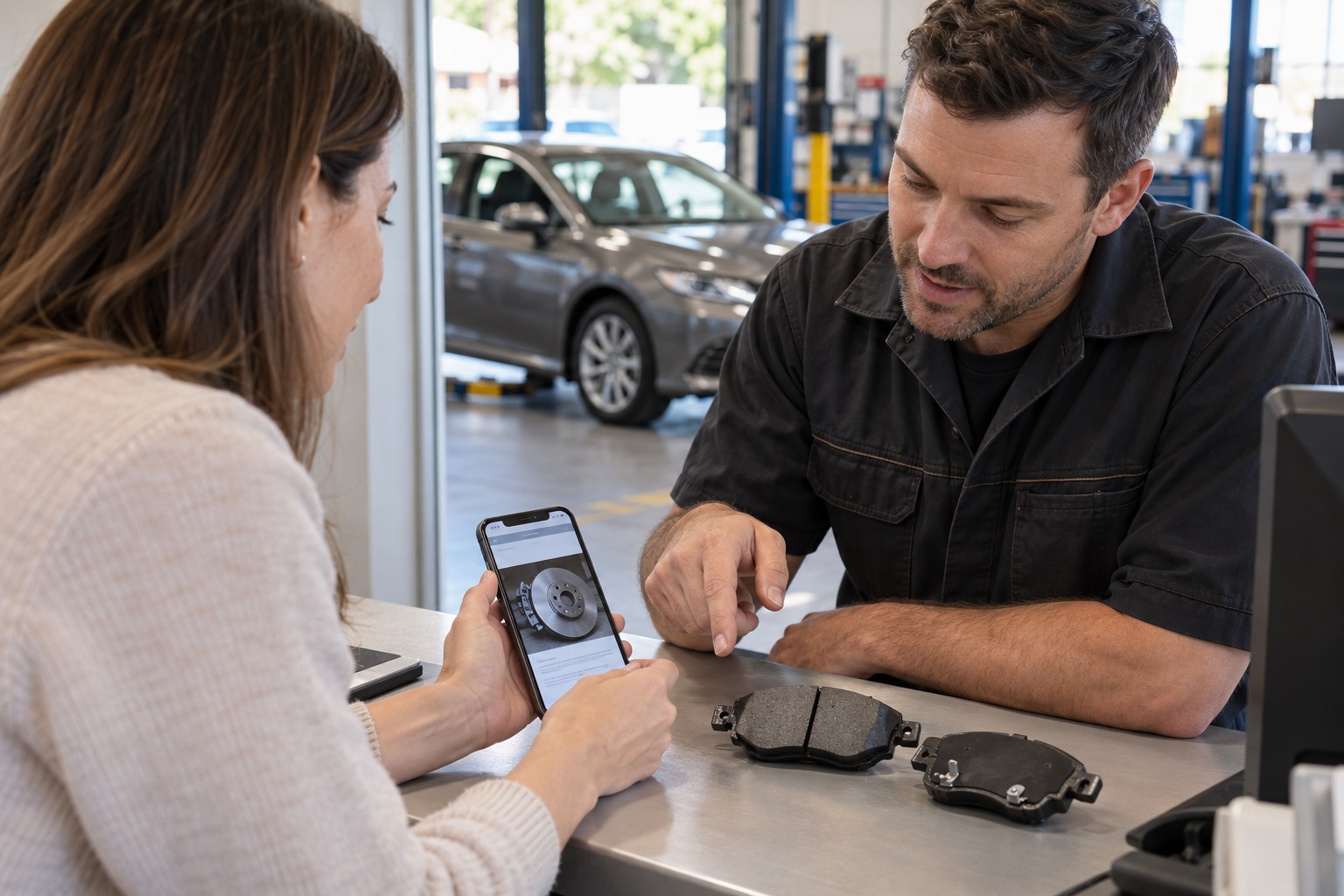
A service page is a page about one job. It has its own web address. It is written for the person who wants that job done.
The jobs you want to be found for need one. A driver two suburbs away searching for a brake job is answered by a page about brake jobs. A list with brakes as its third bullet answers nobody. A page can only be the best answer to a question when the page is about that question.
Google’s own starter guide makes the related point about words. It says to think about the words a user might search for. It also says people who know a lot about a topic use different keywords from people new to it. A driver types ‘squealing brakes’ or ‘roadworthy near me’. The bullet on the site says ‘Brake and clutch repairs’.
Web addresses matter too, and they are the one technical detail worth your time. Google’s guide says to use descriptive addresses, and to include words in them that may be useful to users. A page about brakes belongs at an address with the word brakes in it.
Not every service earns one, and the next section is the test. Poor site structure is the fault listed without explanation in our piece on why a mechanic website does not get enough calls. Which pages exist is most of what that phrase means.

The test has two parts and a job has to pass both. Drivers search for it by name, and it is work you want more of.
The first half of the test is quick to check. If a driver would type the name of the job into Google, that job can carry a page.
The second half of the test is the one owners skip. A job that gets searched by name but loses money on every booking does not earn a page. The page would only bring you more of the work you did not want. A job you want more of that nobody searches for by name belongs on the general page, with a line that explains it.
For a general workshop the likely candidates are logbook servicing, roadworthy certificates and brakes. Air conditioning, clutch and timing belt work, and auto electrical and diagnostic work come next. That list is a starting point rather than a prescription. The answer changes with the shop.
Roadworthy certificates show why the wording on a page matters. In Victoria a person who sells a registered vehicle has to give the buyer a current certificate of roadworthiness, unless the sale is exempt. That is the name the law uses. What a seller types into Google is ‘roadworthy’ or ‘RWC’. The page needs both.
Anything that fails both halves of the test stays on the general services page.

A good service page answers what a driver wants to know before they pick up the phone. Five things cover it.
The price line needs deciding before the page is written. You can publish a price, a starting price, a range, or a promise to quote before any work starts. Pick one and use it on every page, so two of your pages never give a driver different answers.
Booking is the other thing a service page has to settle. The choice between taking a call and taking a form is covered in our piece on mechanic bookings by phone or form.
Everything else on the page is work nobody outside the workshop can do. How long the job takes in your bays. What you tell a customer who asks for the cheap version. Content written from scratch is one of the things that shapes what a build costs, and it is what makes a page worth reading.

A make page is a page about the cars of one manufacturer, such as a page about Toyota servicing. The answer is conditional, and the condition is the whole point.
A make page earns its place only where you hold something the shop down the road does not. The scan tool that reads that brand properly. The training. The parts account that gets a part tomorrow rather than next week.
Take the make name out of the page. If the page still says something useful, it was a real page. If it says nothing at all, you have built a page with nothing on it.
Google is direct about what near-identical pages risk. Its spam policies name doorway abuse, which covers pages created to rank for specific, similar searches. One example it gives is creating substantially similar pages that are closer to search results than a clearly defined, browseable hierarchy. Thirty make pages with the name swapped are that example.
The affordable version works better anyway. Pick the two or three makes that come through your door most often. Let the people who work on them write the page.

A thin page is a page with almost nothing on it: a heading, two sentences and a phone number. A driver who opens one still has to ring up to learn anything.
Google’s spam policies cover the version done at scale. Scaled content abuse, in its words, is when many pages are generated for the primary purpose of manipulating search rankings and not helping users. It is usually large amounts of unoriginal content that gives little or no value to users. One example it lists is creating many pages where the content makes little or no sense to a reader but contains search keywords. A handful of proper service pages is not what that describes. Thirty pages built from one template with the job name swapped is.
Pages for suburbs are a different question. It is answered in our guide to local SEO for plumbers, electricians and builders.
The money argument lands sooner. Every page costs something to write and something to keep current. A price changes, a service stops, a supplier changes. Each of those edits then has to be made on every page that carries it. Five pages that answer five real questions beat thirty that answer none.
Adding pages is a job rather than a support ticket, and that is worth knowing before you ask. Bigger work like new pages or new features is scoped separately from a support package. A well-built site still lets you change your own text, add a page or update a price without calling a developer.
The right number also differs by trade. A general workshop, a tyre retailer and a panel shop do not need the same set of pages. Their customers do not search the same way.
A service page answers two questions: can you do this job, and how do I book it. A blog post answers what a driver asks before they know what they need. One example is why a car pulls to one side under braking.
A service page and a blog post work best kept apart, with a link between them. A blog post chasing the same search as your own service page helps nobody.
Seasonal work belongs on the blog as well, and there is a separate piece on what to publish in the quiet months.
The number of pages is one of the main things that moves what a website costs to build. A five-page site for one trade is a different job from a thirty-page site with online bookings on it. So the list you write today shapes the quote that comes back.
Write down the five jobs that made you the most money this year. Then open your site and check whether each one has a page of its own. If two or three do not, CJ Digital’s web design and development page sets out what that work covers.
Enough to give a page to each job you want more of, with everything else grouped on one services page. A short list of pages that each answer a different question does more for a workshop than a long list that repeats itself.
No. Two things have to be true first. Drivers look for that job by name, and you would take more of it if it came in. The rest of what you do belongs on a single services page where a customer can still see it.
Only for the makes where you hold the tools, the training or the parts access that changes what that owner gets. Where nothing changes, the page has nothing to say, and Google’s spam policies name near-identical pages built to catch similar searches.
The job in plain words, the signs a driver would notice, and how long the car is off the road. Then whatever you have decided to say about price, and what the customer brings with them. Written for the driver rather than for a search engine.